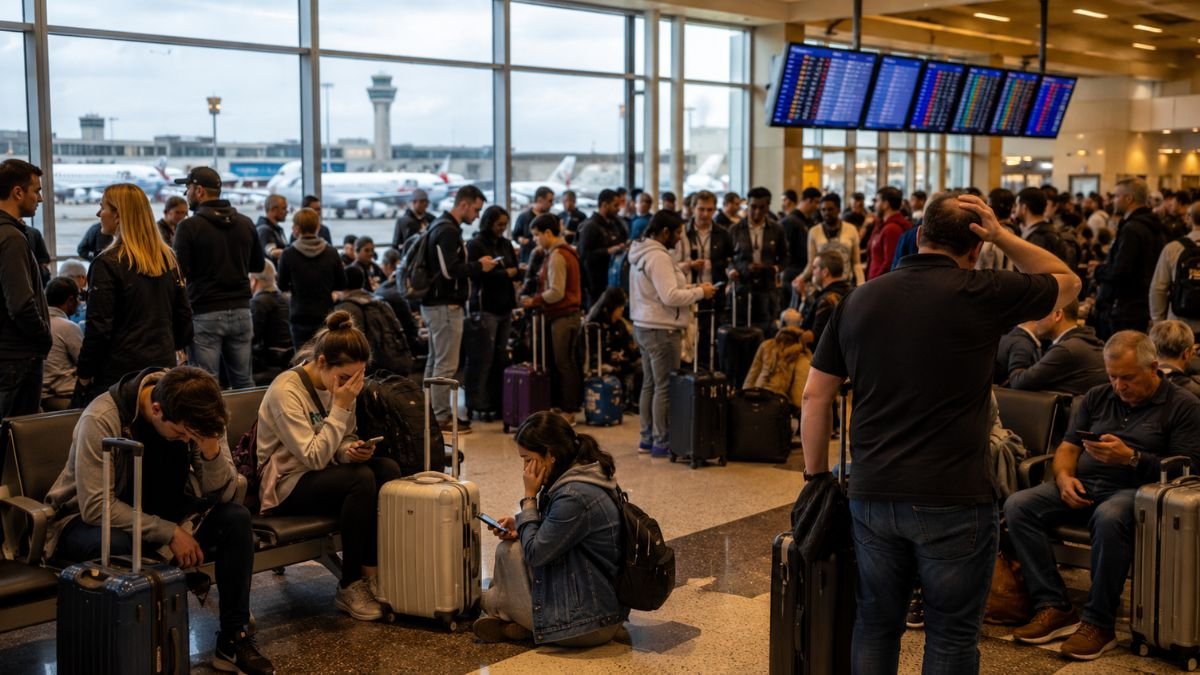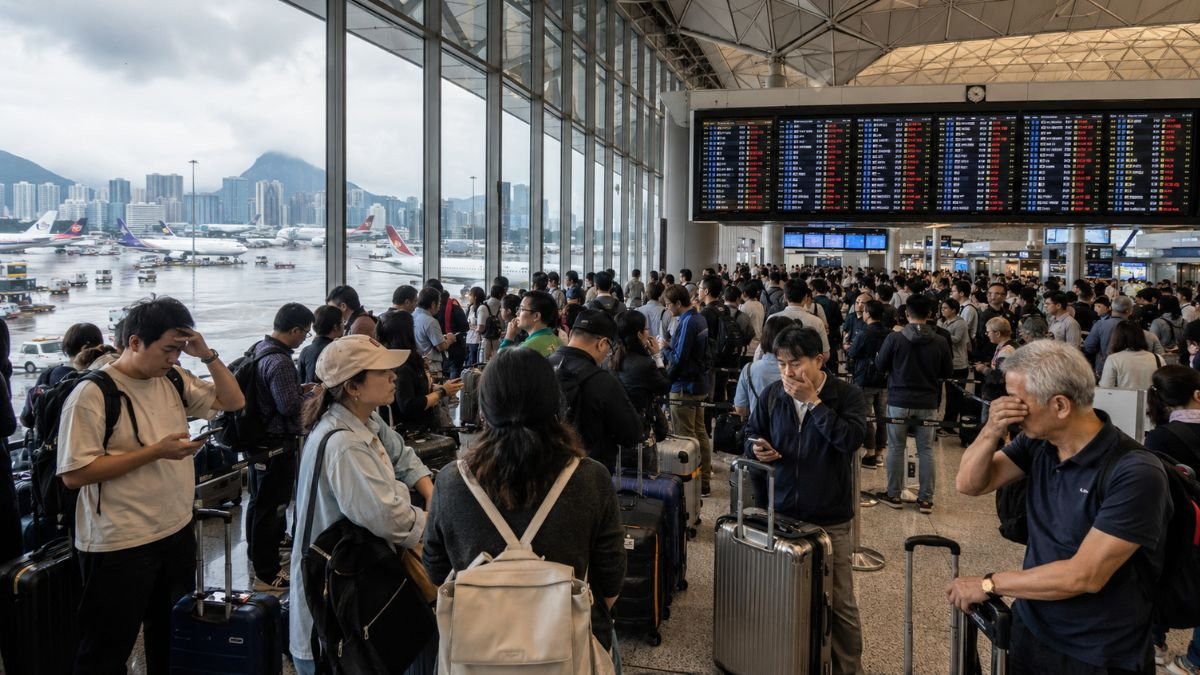
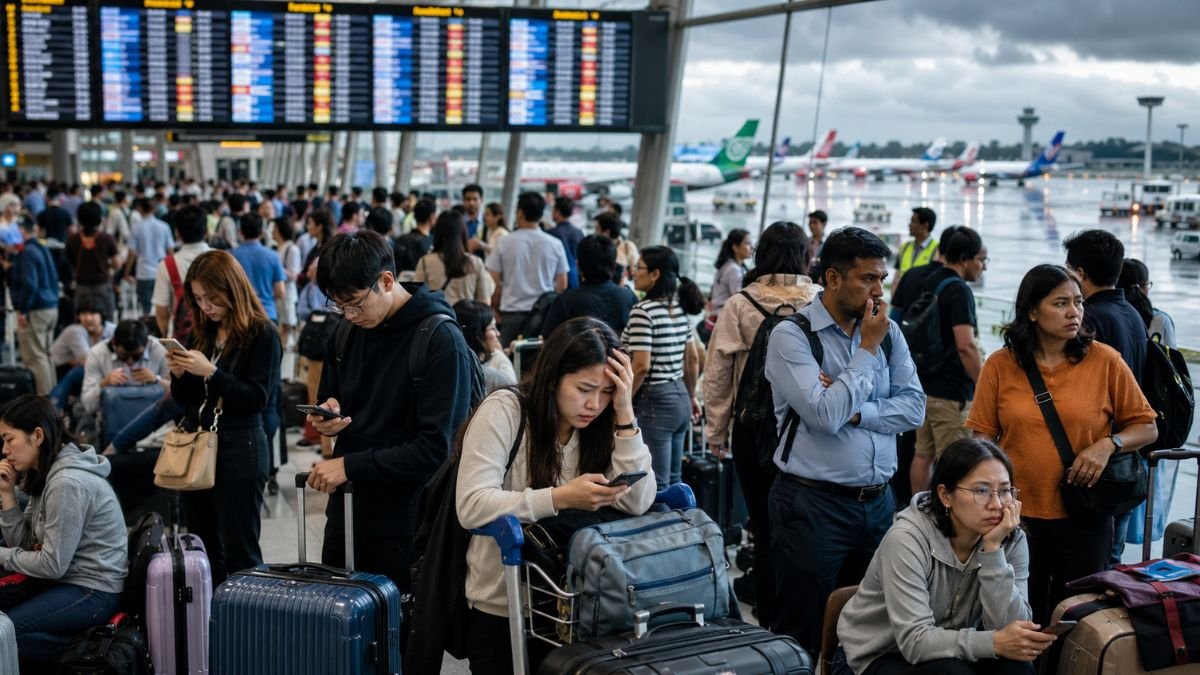
Thousands of passengers across Asia faced travel chaos today as major airports reported widespread flight delays and cancellations.
According to the latest disruption data, at least 5,414 flights were delayed and 332 flights were cancelled across several countries, including Singapore, Thailand, Malaysia, China, India, Indonesia, and the Philippines.
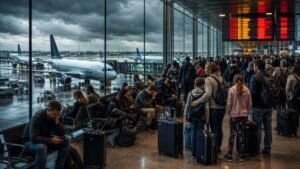
The disruptions affected both domestic and international routes, creating long waits, missed connections, crowded terminals, and schedule changes for travelers.
Major carriers such as China Southern Airlines, China Eastern, Shenzhen Airlines, IndiGo, Air India, AirAsia, Malaysia Airlines, Cebu Pacific Air, Lion Air, Thai Airways, Singapore Airlines, Scoot, and Batik Air were among those impacted.
Most Affected Airports in Asia
China reported some of the heaviest airport disruption numbers. Shenzhen Bao’an International Airport recorded the highest total, with 718 delays and 44 cancellations.

It was followed by Guangzhou Baiyun International Airport, which saw 586 delays and 25 cancellations.
Shanghai was also heavily affected. Shanghai Pudong International Airport reported 350 delays and 14 cancellations, while Shanghai Hongqiao International Airport recorded 239 delays and 14 cancellations. Beijing Capital International Airport also faced operational pressure, with 266 delays and 10 cancellations.
In India, Indira Gandhi International Airport in New Delhi was the most disrupted hub, with 345 delays and five cancellations. Chhatrapati Shivaji Maharaj International Airport in Mumbai recorded 178 delays and three cancellations, affecting several major Indian carriers.
Southeast Asian Hubs Also Face Heavy Delays
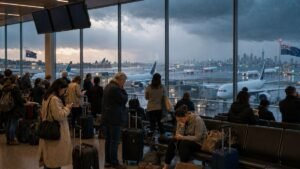
Southeast Asia also saw significant travel disruption. Kuala Lumpur International Airport reported 280 delays and 24 cancellations, affecting AirAsia, Malaysia Airlines, Malindo Air, and other regional carriers.
Singapore Changi Airport recorded 165 delays and one cancellation, with Singapore Airlines, Scoot, AirAsia, and Cathay Pacific among the airlines facing schedule problems.
In the Philippines, Manila International Airport reported 165 delays and 12 cancellations, disrupting Cebu Pacific Air, PAL Express, and other carriers.
Thailand’s Suvarnabhumi Airport in Bangkok saw 161 delays and five cancellations, while Thai Airways recorded notable delays during the day.
Airlines Most Affected by Delays and Cancellations
Among airlines, China Southern Airlines recorded the highest disruption total, with 525 delays and 18 cancellations. China Eastern followed closely with 486 delays and 28 cancellations, while Shenzhen Airlines reported 323 delays and 21 cancellations.
Indian carrier IndiGo faced 292 delays and six cancellations, making it one of the most affected non-Chinese airlines. Air India recorded 181 delays, while Air India Express saw 92 delays across several Indian airports.
Regional carriers also struggled. AirAsia reported 127 delays and 19 cancellations, while Cebu Pacific Air recorded 105 delays. Malaysia Airlines had 88 delays, and Lion Air reported 64 delays across Indonesia.
What Passengers Should Do Now
Travelers affected by today’s Asia flight disruptions should check their airline apps, airport websites, and email notifications before leaving for the airport. Flight schedules can change quickly during periods of heavy delays.
Passengers should also contact airlines early for rebooking options, allow extra time at the airport, keep travel documents ready, and monitor baggage updates if flights are delayed or rerouted.
Those with connecting flights through Shenzhen, Guangzhou, Delhi, Kuala Lumpur, Manila, Singapore, Bangkok, or Mumbai should remain especially alert.
Conclusion
Today’s flight disruptions across Asia have created major challenges for travelers, airlines, and airports. With more than 5,400 delays and 332 cancellations, the impact has spread across China, India, Malaysia, Singapore, Thailand, Indonesia, and the Philippines.
Passengers flying through major hubs should stay flexible, monitor live updates, and prepare for possible schedule changes.
As disruption data can change throughout the day, travelers are advised to confirm flight status directly with their airline before heading to the airport.