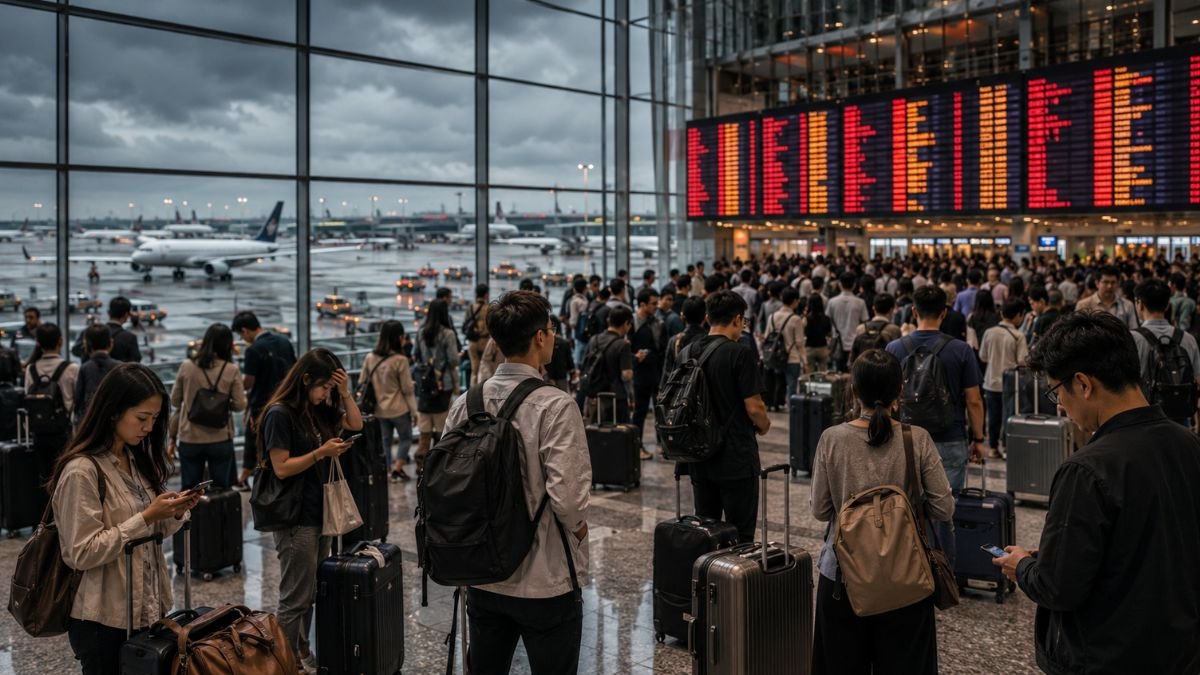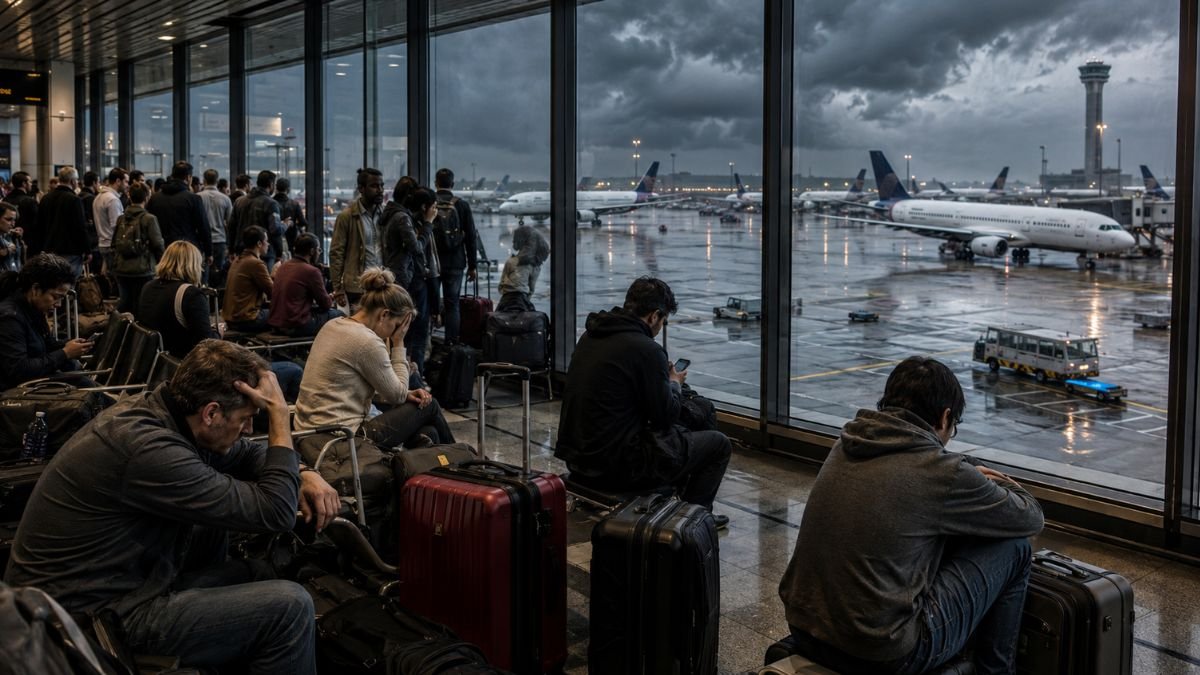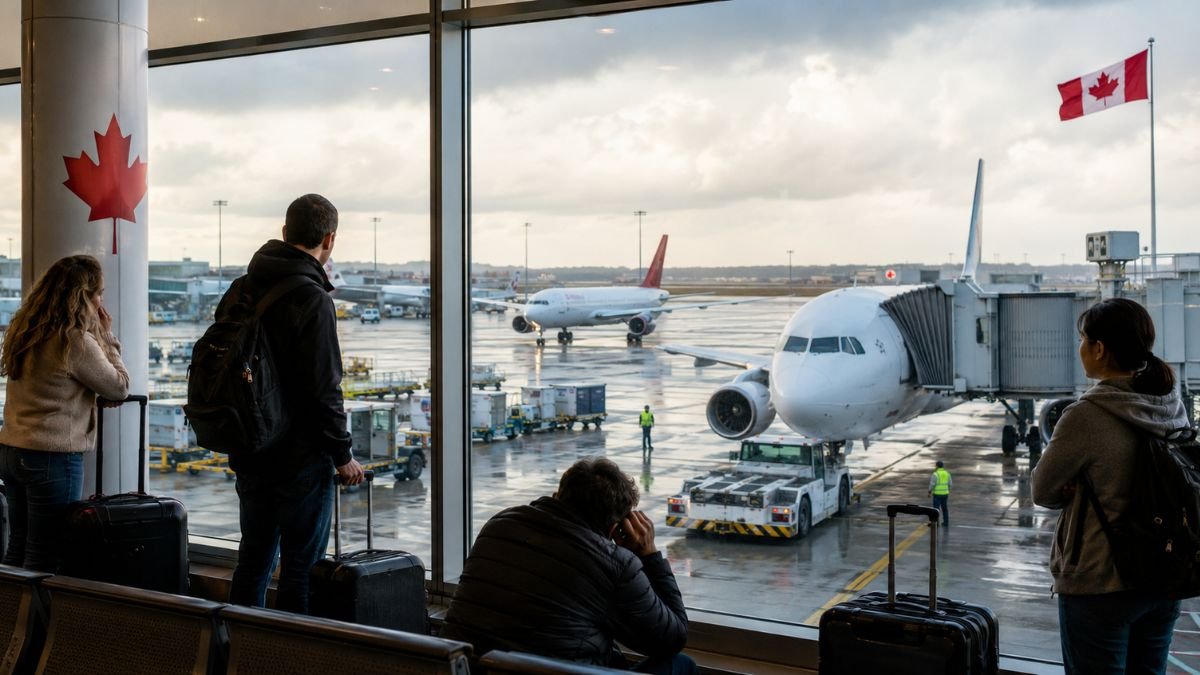
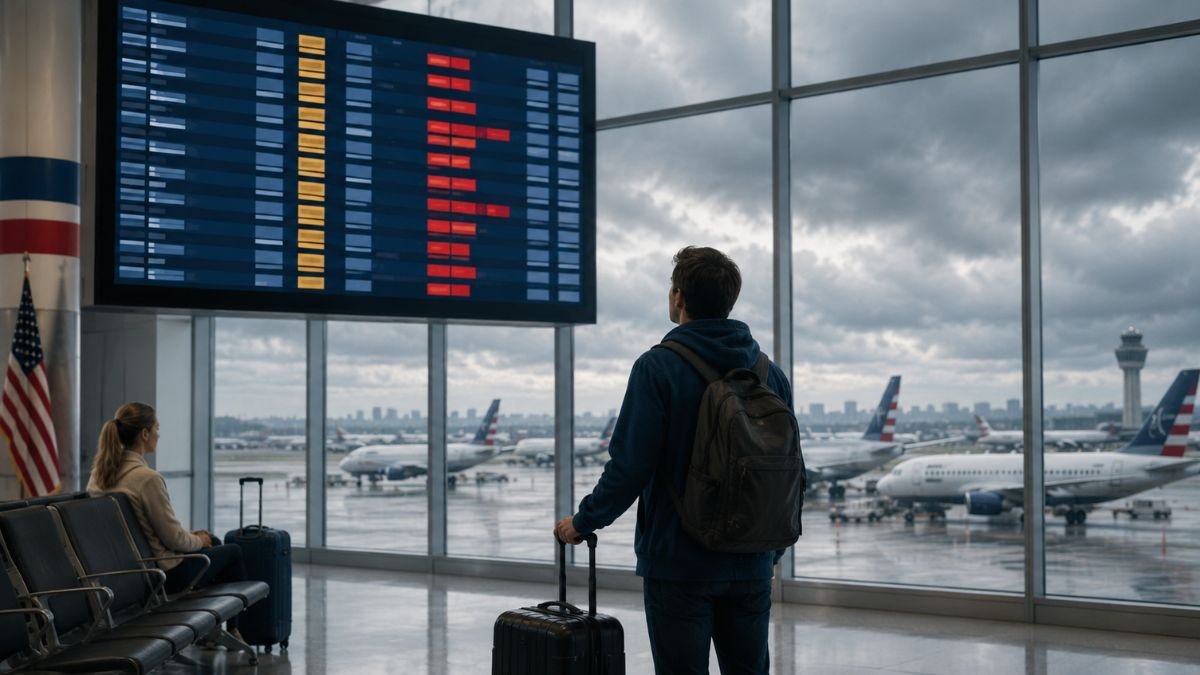
Thousands of passengers across the United States faced major travel trouble today as airlines reported 5,874 delayed flights and 339 cancellations nationwide.
The disruption affected several major airports and airlines, creating long waits, missed connections and uncertainty for travelers trying to move across the country.
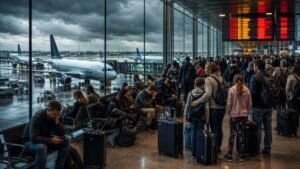
Chicago O’Hare International Airport became the center of the disruption, recording 1,384 delays and 209 cancellations, the highest total in the country.
The problems at Chicago created a ripple effect across several airline networks, especially for passengers flying with United Airlines, American Airlines, SkyWest, Envoy Air, Republic Airways and GoJet Airlines.
Chicago O’Hare Becomes Worst-Hit Airport
Chicago O’Hare was the most affected airport in the United States today. Weather problems and air traffic control restrictions placed heavy pressure on flight operations.

Severe thunderstorms east and south of the airport forced aircraft to use longer rerouted paths, while an air traffic control ground delay program slowed arrivals and departures.
Because Chicago is a major hub for domestic and international connections, delays there quickly spread to other cities. Passengers flying through O’Hare faced long waits, gate changes, rebooking issues and missed connections.
Other Major Airports Facing Delays
Las Vegas’ Harry Reid International Airport also saw heavy disruption, with 533 delays and 13 cancellations. The airport is a major base for domestic travel, and Southwest Airlines was among the carriers heavily affected.
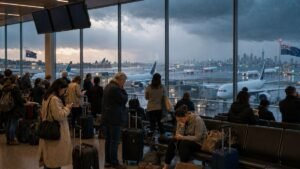
Hartsfield-Jackson Atlanta International Airport recorded 332 delays and 27 cancellations, creating problems for Delta Air Lines and other connecting flights.
Detroit Metro Wayne County Airport reported 251 delays and 9 cancellations, while St. Louis Lambert International Airport saw 194 delays and 24 cancellations.
Kansas City International Airport registered 123 delays and 6 cancellations. Indianapolis International Airport reported 117 delays and 13 cancellations.
Pittsburgh International Airport had 68 delays and 9 cancellations, while Cincinnati/Northern Kentucky International Airport recorded 52 delays and 8 cancellations.
Airlines With The Biggest Disruption
Southwest Airlines reported the highest number of delays nationwide, with 1,695 delayed flights and 21 cancellations. The airline’s operations were affected in several cities, including Las Vegas, Chicago and Kansas City.
SkyWest Airlines recorded the highest cancellation count, with 71 cancellations and 648 delays. As a regional carrier serving many major airline partners, SkyWest’s disruption affected passengers across multiple connecting routes.
United Airlines faced 708 delays and 32 cancellations, largely due to problems around its Chicago hub. American Airlines reported 658 delays and 9 cancellations, while its regional partner Envoy Air added 50 cancellations and 221 delays.
Delta Air Lines experienced 518 delays and 33 cancellations, with Atlanta and Detroit among the key pressure points. Republic Airways reported 31 cancellations and 177 delays, while GoJet Airlines had 36 cancellations and 108 delays.
What Passengers Should Do Now
Travelers should check airline apps before leaving for the airport, as schedules may continue changing throughout the day. Passengers should also review rebooking options, monitor airport alerts and keep phones charged in case of long waits.
Those connecting through Chicago, Atlanta, Las Vegas or Detroit should allow extra time and consider alternate routes if possible.
Travelers should also check airline policies for refunds, meal vouchers, hotel assistance or same-day rebooking support.
Conclusion
Today’s flight disruption across the United States caused serious problems for thousands of passengers, with Chicago O’Hare at the center of the crisis.
Severe weather, air traffic control restrictions and airline network pressure contributed to widespread delays and cancellations.
With 5,874 delays and 339 cancellations reported nationwide, passengers are advised to stay alert, check flight status frequently and remain flexible with travel plans.