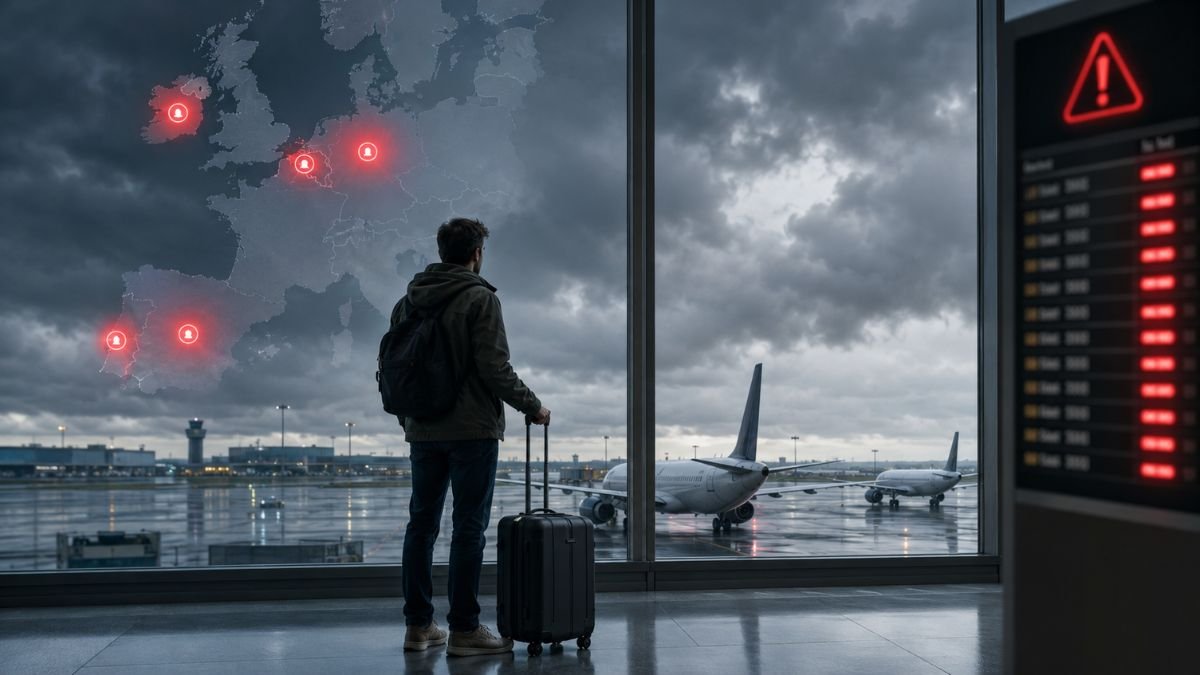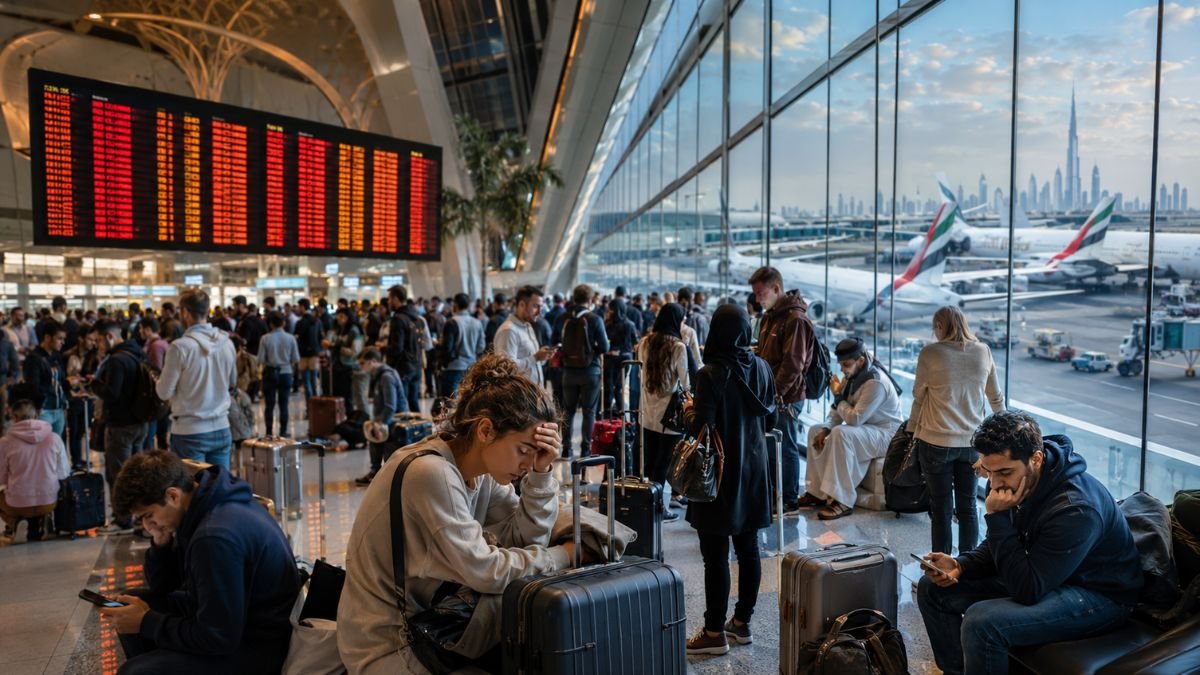
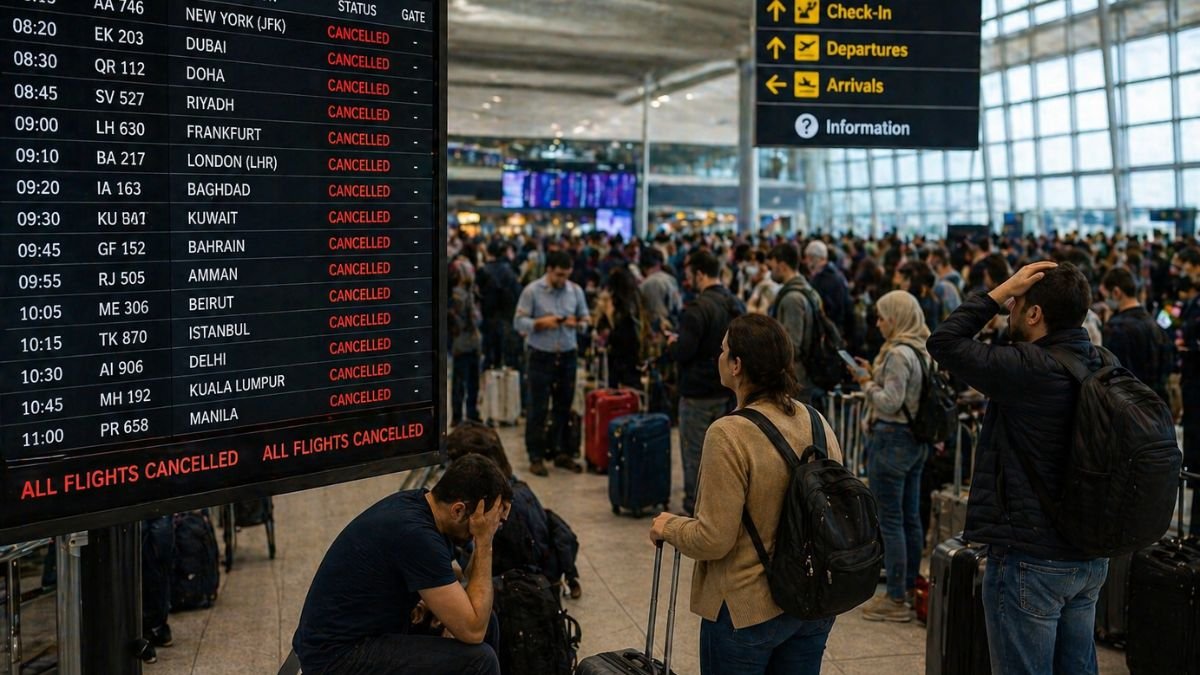
A major aviation disruption across the Middle East has created serious problems for travellers trying to return home.
Iran has joined Israel, the UAE, Qatar, Saudi Arabia, Iraq, Kuwait, Bahrain, Syria and other countries in restricting flight landings and limiting airspace access due to security concerns.

These restrictions have reduced available routes, delayed departures and made repatriation more difficult for American, European and Asian nationals.
Travellers who expected normal commercial flights are now facing limited seats, longer waiting times and expensive alternative routes.
Why Airspace Restrictions Matter
The Middle East is one of the world’s most important aviation corridors. Flights between Asia, Europe and Africa often pass through or connect in this region. When several countries restrict airspace at the same time, the effect spreads quickly across global travel networks.

Major hubs such as Dubai, Doha, Riyadh and Tel Aviv play a key role in international movement. Reduced operations at these airports create bottlenecks for passengers, airlines and governments arranging emergency departures.
Iran Becomes A Central Point Of The Crisis
Iran remains one of the most affected countries in the disruption. With airspace restrictions and limited commercial operations, travellers have fewer direct options to leave.
Many are forced to depend on evacuation flights, government support or overland routes through neighbouring countries.
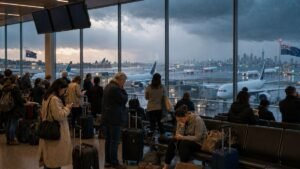
This has turned simple journeys into complex travel plans involving border crossings, delayed connections and uncertain departure schedules.
Gulf Hubs Face Heavy Pressure
The UAE and Qatar have also faced major disruption because of their role as global transit centres. Dubai and Doha usually handle millions of international passengers, but reduced operations have made it harder for travellers to connect between continents.
Saudi Arabia has remained an important alternative hub, but demand has increased sharply. Even partial operations have led to delays, limited seat availability and heavy pressure on airport systems.
Smaller Regional Hubs Also Affected
Iraq, Kuwait, Bahrain and Syria have added further pressure to the aviation network. Airspace closures, suspended routes and limited airport activity have made repatriation harder for people stranded in or near these countries.
In some cases, travellers must rely on land routes before reaching a country where flights are available. This increases travel time, cost and uncertainty.
Repatriation Becomes Slower And More Expensive
For American, European and Asian travellers, the biggest challenge is finding a safe and confirmed route home. Limited flights mean seats are quickly booked, while rerouting can add hours or even days to journeys.
Families, workers, students and tourists are all affected. Many must wait for special charters or embassy-coordinated departures instead of using normal airline bookings.
Conclusion
Iran joining Israel, UAE, Qatar, Saudi Arabia, Iraq, Kuwait, Bahrain and Syria in regional flight restrictions has deepened the Middle East aviation crisis.
With fewer safe corridors and reduced airport capacity, repatriation has become slower, costlier and more uncertain for travellers across the world.