
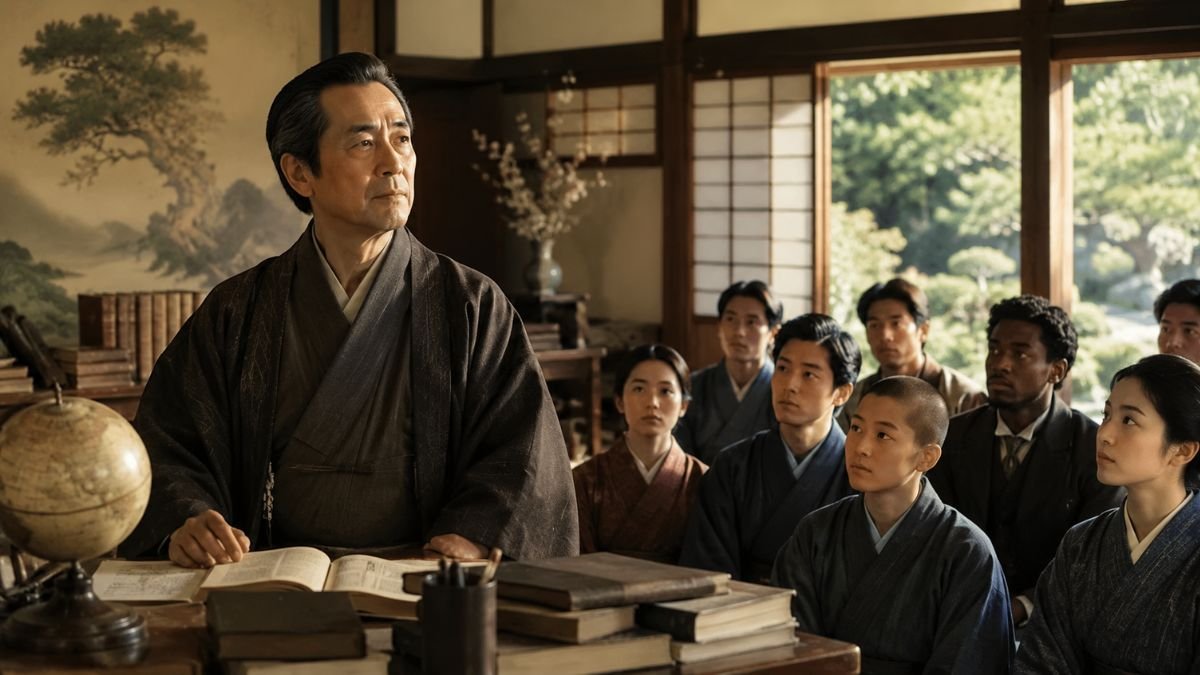
Yukichi Fukuzawa’s famous saying, “Heaven does not create one man above or below another man,” remains one of the most meaningful ideas in Japanese social thought. The proverb speaks directly to equality, education, opportunity, and human progress.
At first, people may appear unequal because of wealth, social status, family background, profession, or access to resources.

Some are born into comfort, while others face hardship from an early age. But Fukuzawa’s message challenges the belief that some people are naturally superior while others are naturally inferior.
His point is simple but powerful: people are not born above or below one another. The differences we see in society often grow from education, opportunity, environment, and access to knowledge.
Meaning of Yukichi Fukuzawa’s Famous Proverb
The proverb suggests that human beings are equal by nature. No person is created with a divine right to stand above another. Instead, social differences are shaped by what people learn, where they grow up, and what chances they receive in life.

Fukuzawa believed that education plays a major role in separating the informed from the uninformed and the independent from the dependent. A person with access to knowledge can think more clearly, make better choices, and improve their future. A person denied education may struggle, not because they lack ability, but because they lack opportunity.
This makes the proverb deeply connected to fairness and social progress.
Why Education Shapes Opportunity
Education is more than school lessons, exams, and degrees. It includes awareness, discipline, communication, practical skills, critical thinking, and the ability to understand the world.
When people receive quality education, they gain confidence and independence. They can pursue better careers, manage challenges, understand society, and make informed decisions. Education opens doors that may otherwise remain closed.
Fukuzawa’s proverb reminds us that many life differences are not caused by birth alone. They are often caused by unequal access to learning and resources.
Knowledge and Self-Reliance
One of Fukuzawa’s strongest beliefs was that education helps people become self-reliant. A knowledgeable person does not have to depend completely on others for direction. They can think independently, solve problems, and take responsibility for their own life.
Knowledge also builds dignity. It allows people to question unfair systems, understand their rights, and work toward a better future. This is why education is not only personal—it is also social. A society that educates its people becomes stronger, fairer, and more capable of progress.
Why This Proverb Still Matters Today
Even in the modern world, education remains closely linked to opportunity. Access to good schools, books, technology, teachers, and safe learning environments can strongly affect a person’s future.
However, educational inequality still exists in many communities. Some children grow up with excellent resources, while others struggle with poor schools, poverty, or limited support. Fukuzawa’s message remains relevant because it reminds us that social progress depends on equal access to learning.
If societies want to reduce inequality, education must be treated as a basic foundation for growth.
Education Beyond the Classroom
This proverb also encourages lifelong learning. Education does not end after school or university. People continue to learn through reading, experience, conversation, work, observation, and curiosity.
Anyone can grow by staying open to new ideas and improving their knowledge. This makes Fukuzawa’s message useful for students, workers, parents, leaders, and anyone seeking personal development.
Yukichi Fukuzawa’s proverb, “Heaven does not create one man above or below another man,” carries a timeless lesson. No one is born superior or inferior. The differences between people often come from education, opportunity, and access to knowledge.
The saying encourages individuals to keep learning and encourages societies to create fairer systems. When people are given the chance to learn, they can improve their lives, build confidence, and contribute to social progress.
The message is clear: education can change lives, reduce inequality, and help people rise beyond the limits placed on them by circumstance.