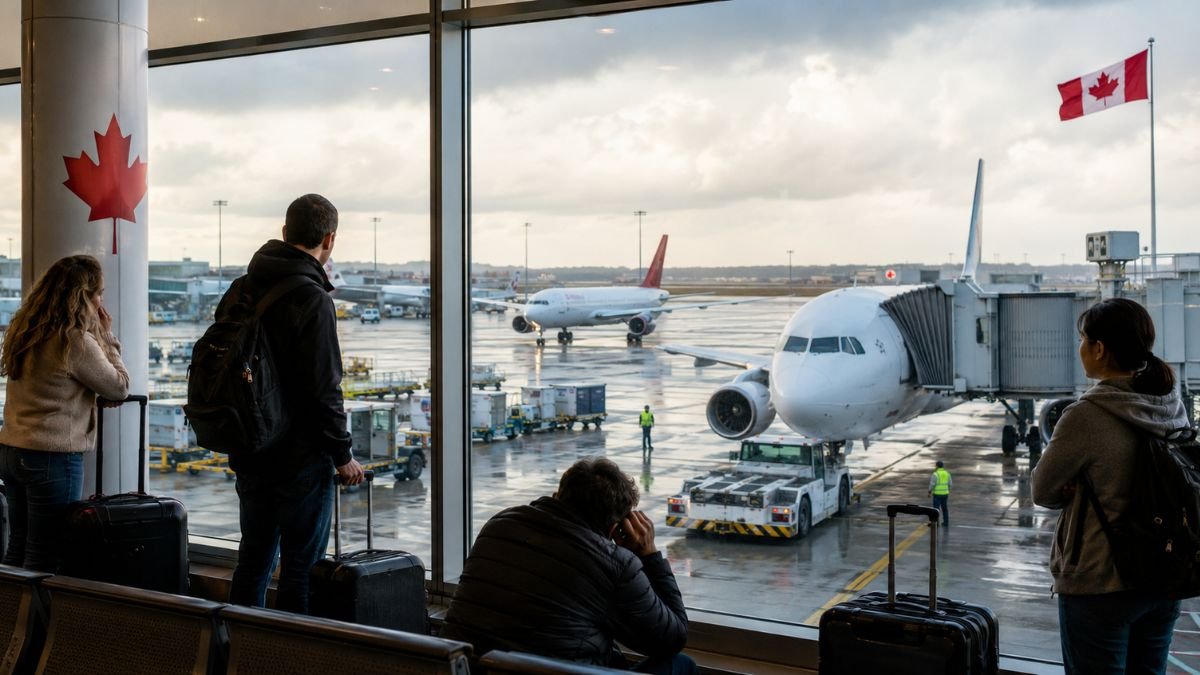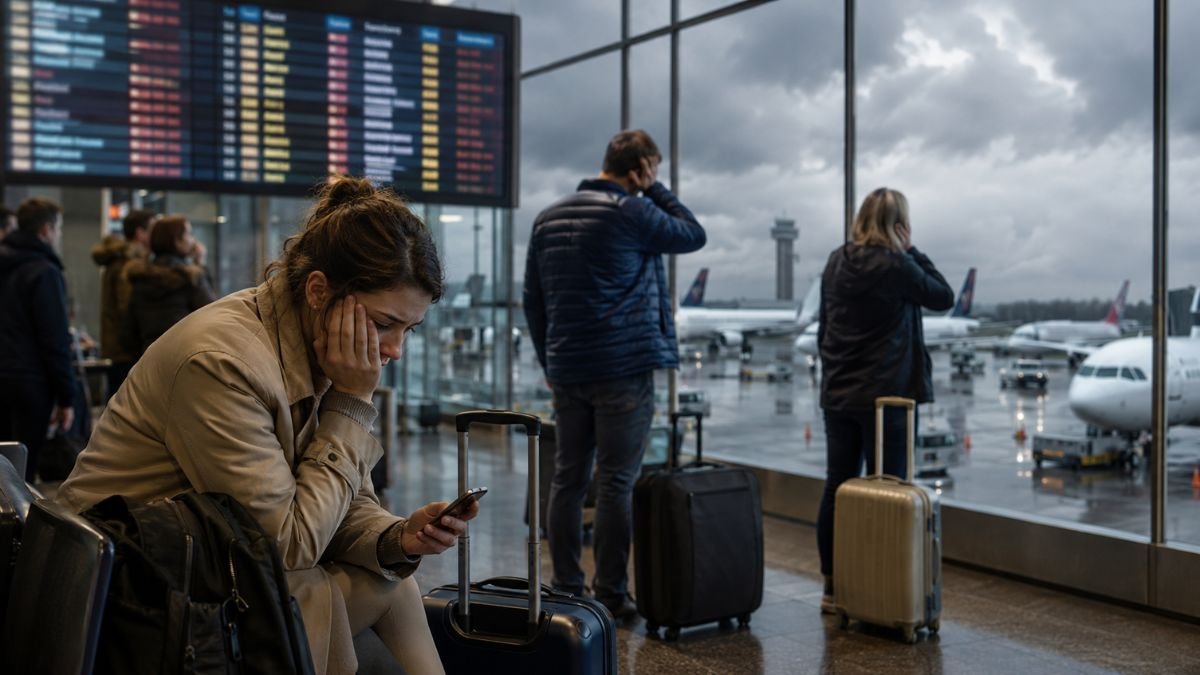
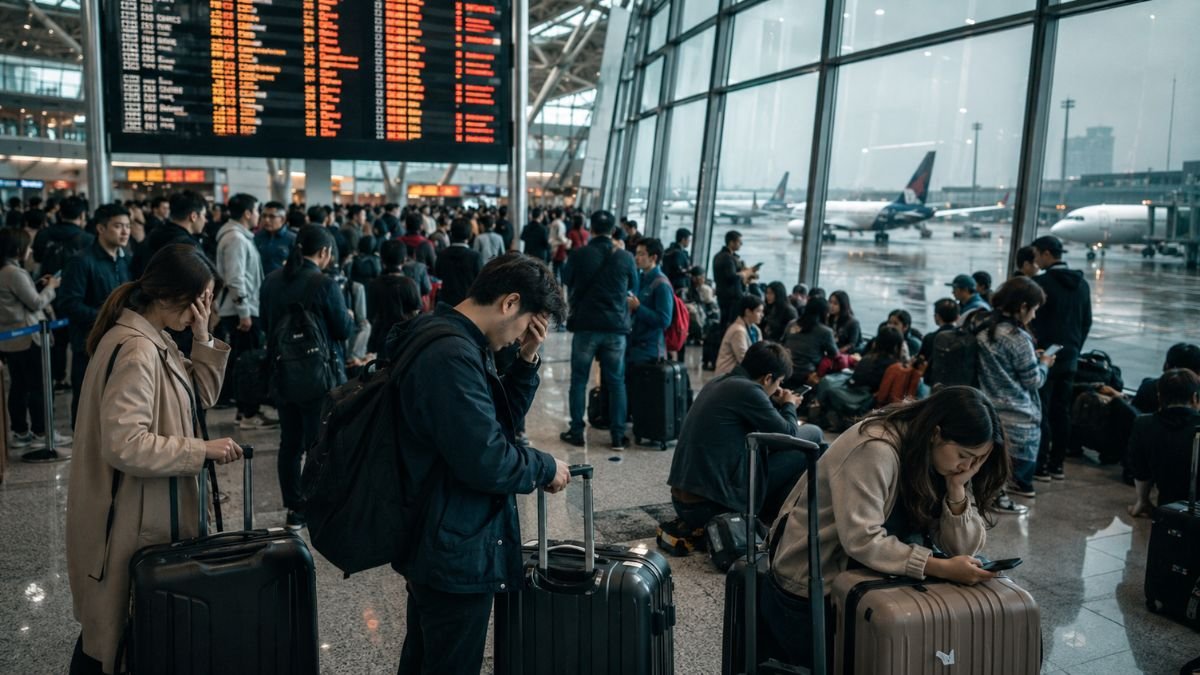
Thousands of travelers across Asia are facing major disruption as airlines and airports struggle with cancellations, delays and heavy passenger movement.
China, India, the UAE, Indonesia and Thailand are among the countries affected, with 318 flights cancelled and 3,649 flights delayed across key aviation hubs.

Major airports including Guangzhou, New Delhi, Dubai, Jakarta, Bangkok and others are reporting operational pressure. Airlines such as China Eastern, IndiGo, AirAsia, Emirates, Qatar Airways, Batik Air and several more are dealing with schedule changes, longer wait times and frustrated passengers.
Major Asian Airports Face Heavy Disruption
Several of Asia’s busiest airports are seeing serious delays and cancellations. Guangzhou Baiyun International Airport recorded the highest number of cancellations, with 46 flights cancelled and 358 delayed.
Shenzhen Bao’an International Airport also faced major disruption, with 15 cancellations and 509 delays.

Other Chinese airports, including Shanghai Pudong, Beijing Daxing, Chongqing Jiangbei and Xi’an Xianyang, also reported delays and cancellations.
This shows that the disruption is not limited to one city but is affecting several parts of China’s aviation network.
Outside China, Jakarta Soekarno-Hatta, Kuala Lumpur International, Bangkok Suvarnabhumi, Dubai International and King Abdulaziz International Airport are also facing delays.

Regional airports such as Sharjah, Penang, Urumqi and Nanjing have also reported operational challenges.
Airlines Struggle To Maintain Schedules
Airlines across the region are facing mounting pressure. China Eastern Airlines appears to be among the most affected, with 65 cancellations and 251 delays.
Air China has also reported 34 cancellations and 167 delays, while China Express Airlines and Batik Air are dealing with multiple cancelled flights.
China Southern Airlines has fewer cancellations but a high number of delays, showing how congestion can affect schedules even when flights are not cancelled.
Low-cost carriers including AirAsia and Juneyao Airlines are also experiencing delays as demand remains strong.
International airlines such as Emirates, Qatar Airways, Saudia and Aeroflot are reporting fewer cancellations but significant delays. This is especially difficult for long-haul passengers and those with connecting flights.
Why Flights Are Being Delayed
The disruption appears to be linked to a mix of airport congestion, logistical pressure and high summer travel demand. When one major hub faces delays, the impact can quickly spread across connecting routes and nearby airports.
Asia’s air travel network is deeply connected, meaning delays in Guangzhou, Dubai, Jakarta or Bangkok can affect passengers traveling across multiple countries. This creates a chain reaction that makes recovery slower for airlines and airports.
What Passengers Should Do
Travelers should check airline apps, airport websites and email alerts before leaving for the airport. Those with cancelled flights should contact their airline for rebooking, refund or compensation options.
Passengers with connecting flights should allow extra time and consider alternate routes where possible. Travel insurance may also help cover additional costs caused by missed connections, hotel stays or long delays.
Conclusion
Asia’s aviation network is facing serious pressure as 318 cancellations and 3,649 delays affect major airports and airlines across China, India, UAE, Indonesia, Thailand and beyond.
With thousands of travelers impacted, passengers should stay updated, arrive early and remain flexible with travel plans.
While the disruption is challenging, careful planning can help reduce inconvenience during this busy travel period.