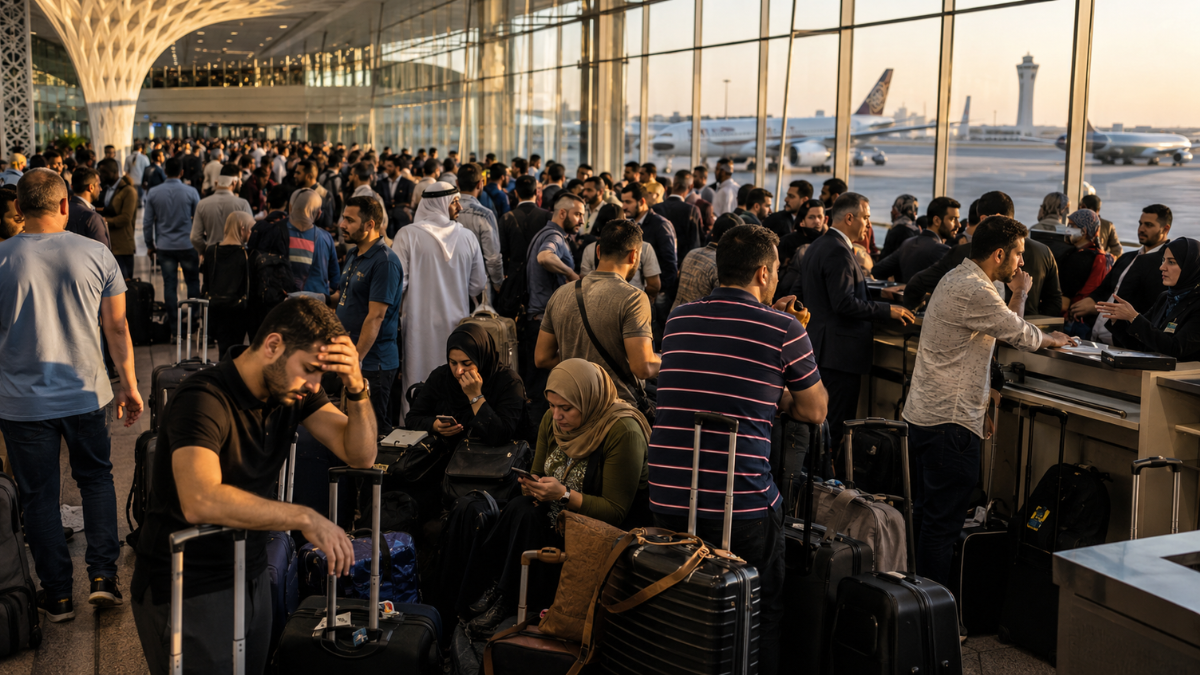
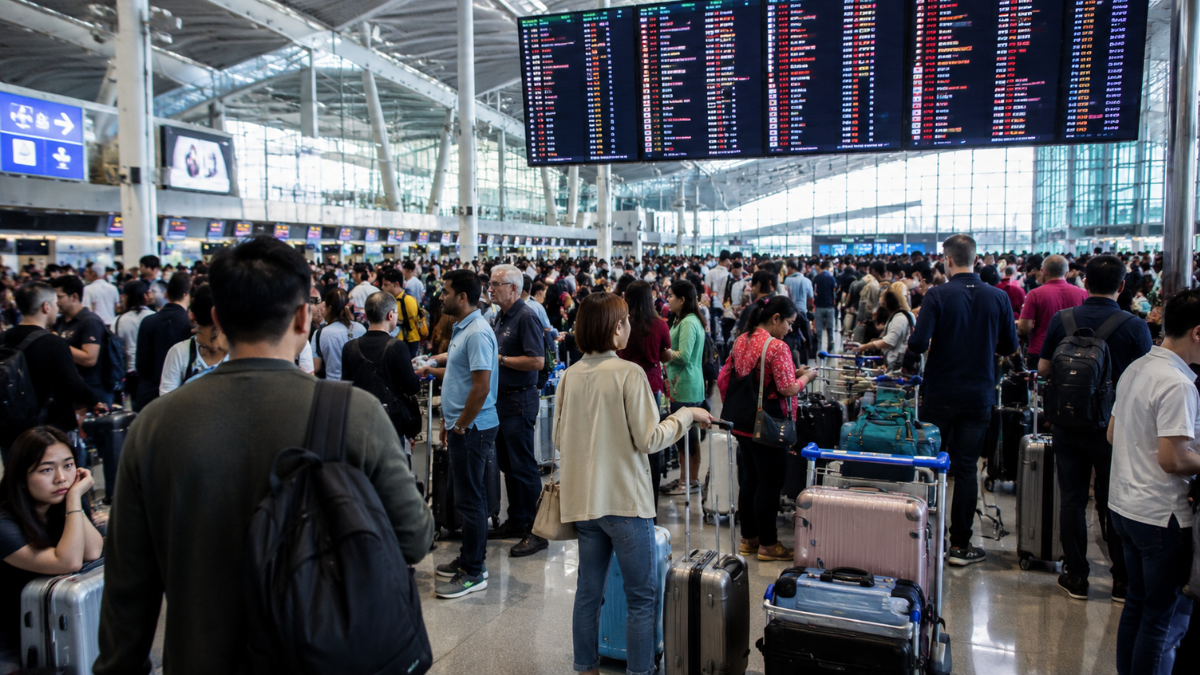
Thousands of travelers across Asia are facing major disruption as airlines and airports struggle with widespread delays and cancellations.
China, India, UAE, Indonesia and Thailand are among the countries affected, with 318 flights cancelled and 3,649 flights delayed across key aviation hubs.

Major airports including Guangzhou, New Delhi, Dubai, Jakarta and Bangkok are experiencing heavy pressure as high summer travel demand, airport congestion and operational challenges combine to create long waiting times and schedule changes.
Major Airports Hit By Delays And Cancellations
Several of Asia’s busiest airports are reporting serious disruption. Guangzhou Baiyun International Airport has recorded 46 cancellations and 358 delays, making it one of the most affected hubs.
Shenzhen Bao’an International Airport has also faced significant pressure, with 15 cancellations and 509 delays. Other Chinese airports, including Shanghai Pudong, Beijing Daxing, Chongqing Jiangbei and Xi’an Xianyang, are also reporting flight problems.

The disruption is not limited to China. Jakarta Soekarno-Hatta International Airport, Kuala Lumpur International Airport, Bangkok Suvarnabhumi, Dubai International and King Abdulaziz International Airport in Saudi Arabia are also experiencing delays and cancellations.
Airlines Struggling To Maintain Schedules
Several major airlines have been affected by the operational strain. China Eastern Airlines has reported 65 cancellations and 251 delays, making it one of the hardest-hit carriers.
Air China has also faced disruption, with 34 cancellations and 167 delays. China Express Airlines and Batik Air have reported notable cancellation numbers as well.

China Southern Airlines has recorded fewer cancellations, but a high number of delays, showing how congestion and scheduling pressure are affecting airline operations. Low-cost carriers such as AirAsia and regional airlines including IndiGo, SpiceJet, Bangkok Airways and XiamenAir are also dealing with delays.
International airlines including Emirates, Qatar Airways, Saudia and Aeroflot have reported fewer cancellations but significant delays, affecting long-haul passengers and connecting travelers.
Why Asia’s Flight Network Is Under Pressure
The current disruption appears to be linked to a mix of airport congestion, logistical bottlenecks and increased passenger demand. With more people traveling during the busy season, airports and airlines are finding it harder to keep schedules running smoothly.
Because Asia’s air network is highly connected, problems at one major hub can quickly affect flights in other cities and countries. A delay in Guangzhou, Dubai or Bangkok can cause missed connections, late arrivals and schedule changes across multiple routes.
This is why the impact is being felt across domestic, regional and international travel.
What Passengers Should Do Now
Travelers affected by delays or cancellations should check airline apps, airport websites and email alerts before leaving for the airport. Passengers should also contact their airline directly for rebooking options, refunds or assistance.
Those with connecting flights should allow extra time and consider alternate routes where possible. Travel insurance may also help cover additional costs linked to missed connections, hotel stays or unexpected schedule changes.
Arriving early at the airport is also important, especially as delays can create longer queues at check-in, security and customer service counters.
Conclusion
Asia’s aviation network is facing major pressure as 318 cancellations and 3,649 delays disrupt travel across China, India, UAE, Indonesia, Thailand and other key regions.
With major airlines and airports affected, passengers should stay alert, check updates regularly and prepare for longer travel times.
While the disruption is frustrating, careful planning can help travelers reduce stress and manage unexpected changes more effectively.