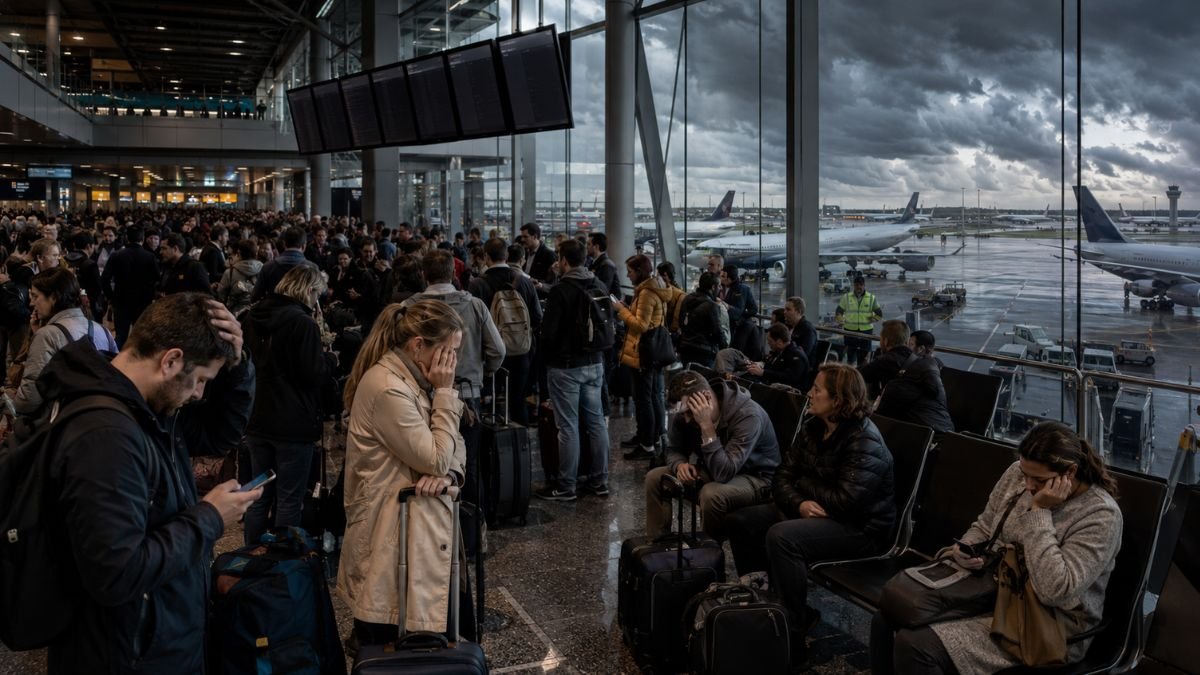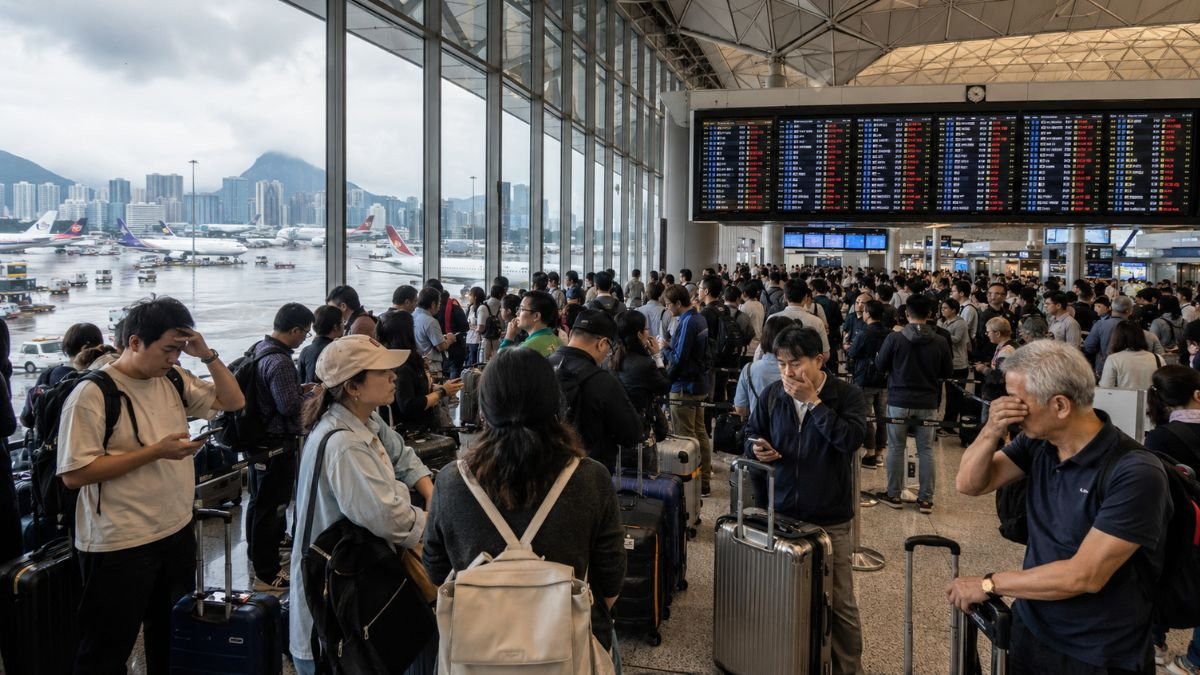
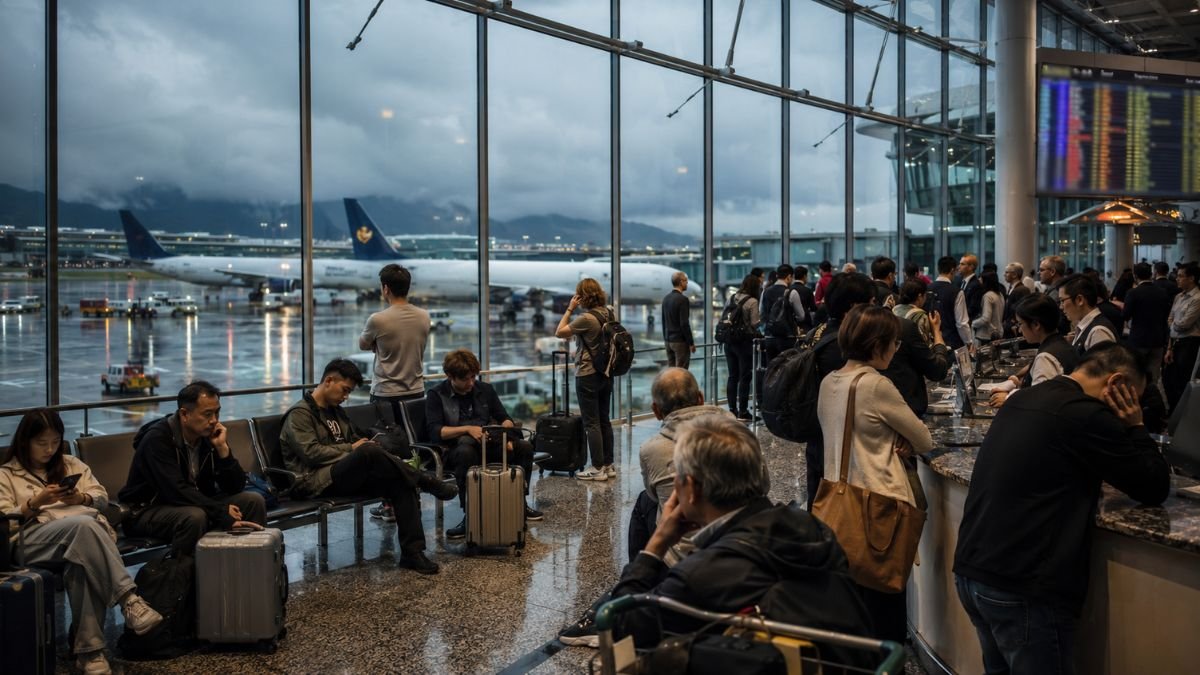
Air travel across Asia faced significant disruption as 275 flights were cancelled and 5,154 were delayed across major international and domestic aviation hubs.
Airports in China, India, Singapore, South Korea, Thailand, Malaysia, Hong Kong and Kuwait experienced operational difficulties. China Eastern Airlines, IndiGo, Japan Airlines, Kuwait Airways and several other carriers were among those affected.

The disruption left passengers facing lengthy waits, missed connections and increased demand for rebooking assistance.
Chinese Airports Record Severe Disruption
China was the most heavily affected aviation market, with substantial delays reported across Shanghai, Beijing, Guangzhou, Shenzhen, Chengdu and Chongqing.
Shanghai Pudong International Airport recorded the region’s highest disruption level, with 624 delays and 24 cancellations. Shanghai Hongqiao International Airport reported another 377 delays and eight cancellations.

Beijing’s two major airports also experienced considerable pressure. Beijing Capital International Airport recorded 342 delays and 12 cancellations, while Beijing Daxing International Airport reported 166 delays and 12 cancellations.
Shenzhen Bao’an International Airport registered 293 delays and eight cancellations. Guangzhou Baiyun International Airport had 287 delayed services and 10 cancellations.
Operational problems also spread to inland airports. Chongqing Jiangbei International Airport recorded 203 delays and 13 cancellations, while Chengdu Tianfu International Airport reported 151 delays and 10 cancellations.
Additional disruption at airports serving Wuhan, Kunming, Xi’an, Hangzhou and Haikou showed that the pressure extended across China’s wider aviation network.
Delays Spread Across Major Asian Hubs
Outside mainland China, Kuala Lumpur International Airport recorded 211 delays and eight cancellations, making it one of Southeast Asia’s most disrupted hubs.
Singapore Changi Airport reported 193 delays and one cancellation, while Hong Kong International Airport experienced 163 delays and one cancellation.
In India, Indira Gandhi International Airport in New Delhi recorded 146 delays and five cancellations. Mumbai’s Chhatrapati Shivaji Maharaj International Airport reported 141 delays and five cancellations.
Bangkok’s Suvarnabhumi Airport experienced 138 delays and two cancellations. In South Korea, Incheon International Airport recorded 89 delays and three cancellations.
Problems at these important transfer hubs risked creating further delays across tightly connected domestic and international routes.
China Eastern Leads Airline Disruption Figures
China-based airlines accounted for a significant proportion of the reported disruption. China Eastern Airlines recorded 717 delays and 40 cancellations, making it the most affected carrier in the available data.
Air China reported 369 delays and 37 cancellations, while China Southern Airlines experienced 312 delays and two cancellations. Hainan Airlines recorded 158 delays and 26 cancellations.
Shenzhen Airlines reported 187 delays and eight cancellations, while China Express Airlines had 110 delays and seven cancellations. Shanghai Airlines recorded another 105 delays and four cancellations.
Outside China, IndiGo experienced 201 delays and two cancellations. Japan Airlines reported 134 delays and two cancellations, while All Nippon Airways recorded 126 delays and one cancellation.
AirAsia had 77 delays and 12 cancellations, while Batik Air reported 51 delays and 20 cancellations. Kuwait Airways recorded 36 cancellations and five delays, giving it one of the highest cancellation totals among the affected carriers.
What Affected Passengers Should Do
Passengers should regularly check official airline applications, airport departure boards and email or text notifications for schedule changes.
Travellers connecting through heavily affected hubs should reconfirm every stage of their journey and allow additional time between flights. Those whose services are cancelled should contact airline rebooking teams immediately.
Receipts, booking records and cancellation notices should be retained in case passengers are eligible for meals, accommodation, refunds or compensation under applicable airline policies and regulations.
Conclusion
With 5,154 delays and 275 cancellations, the disruption affected aviation corridors across much of Asia.
China’s airports and airlines faced the greatest pressure, but significant operational problems also reached India, Southeast Asia, South Korea, Japan and Kuwait.
Travellers should monitor their flights closely as schedules may continue to change.