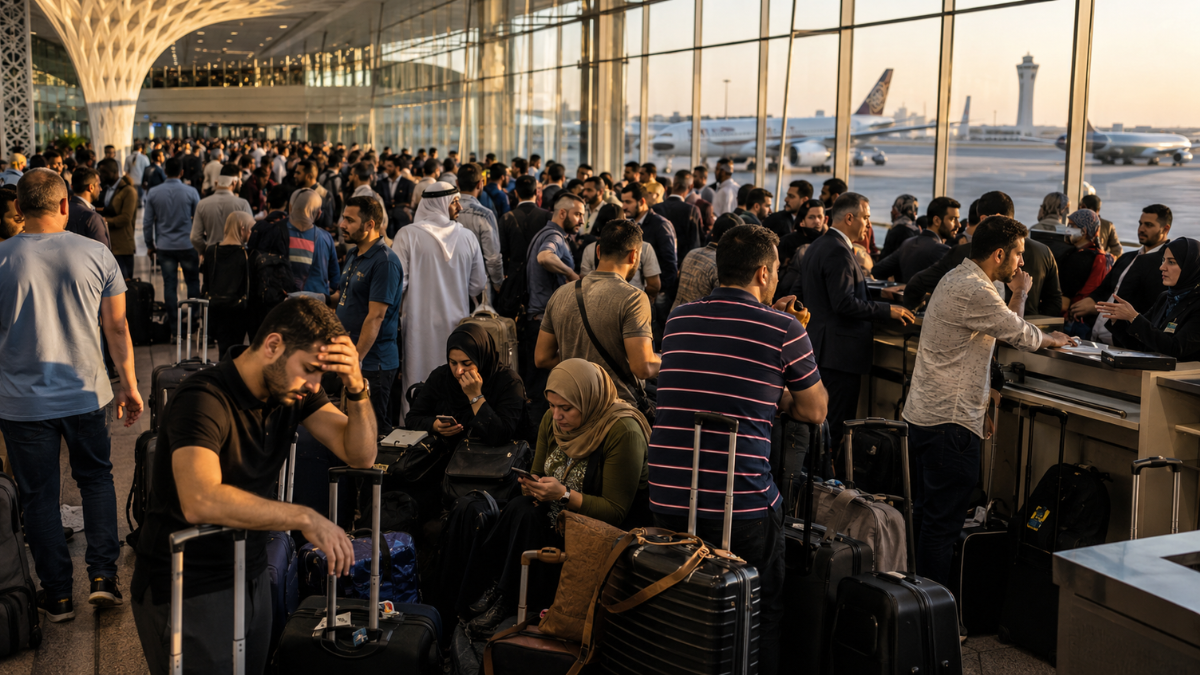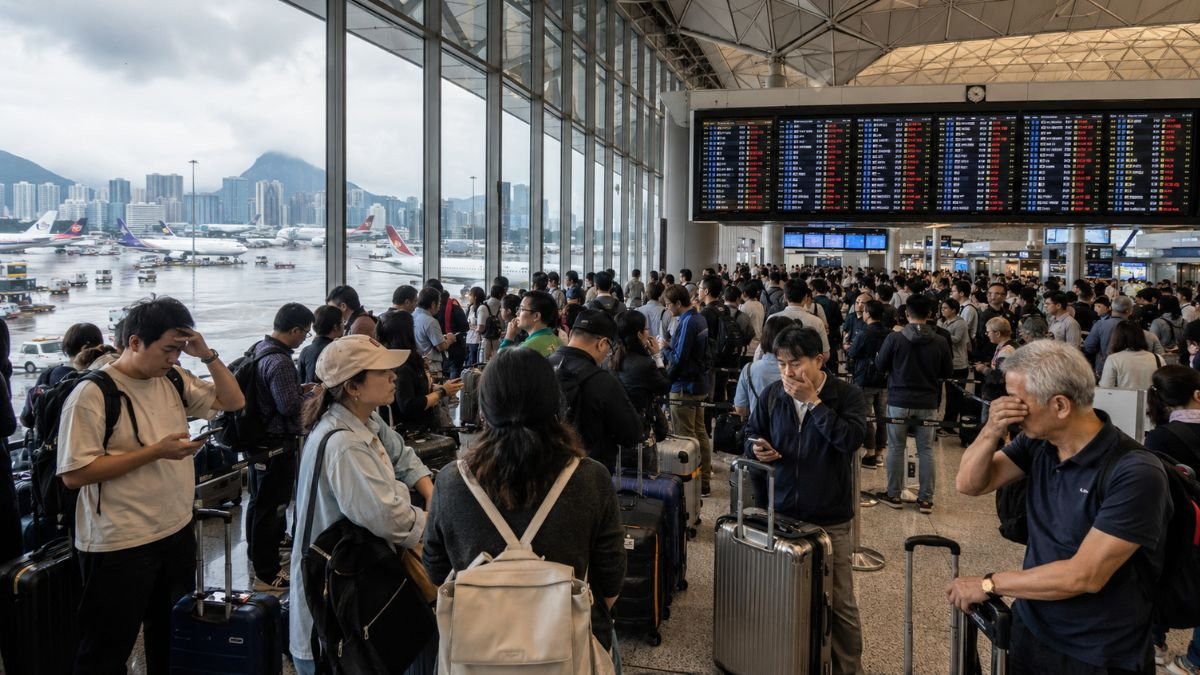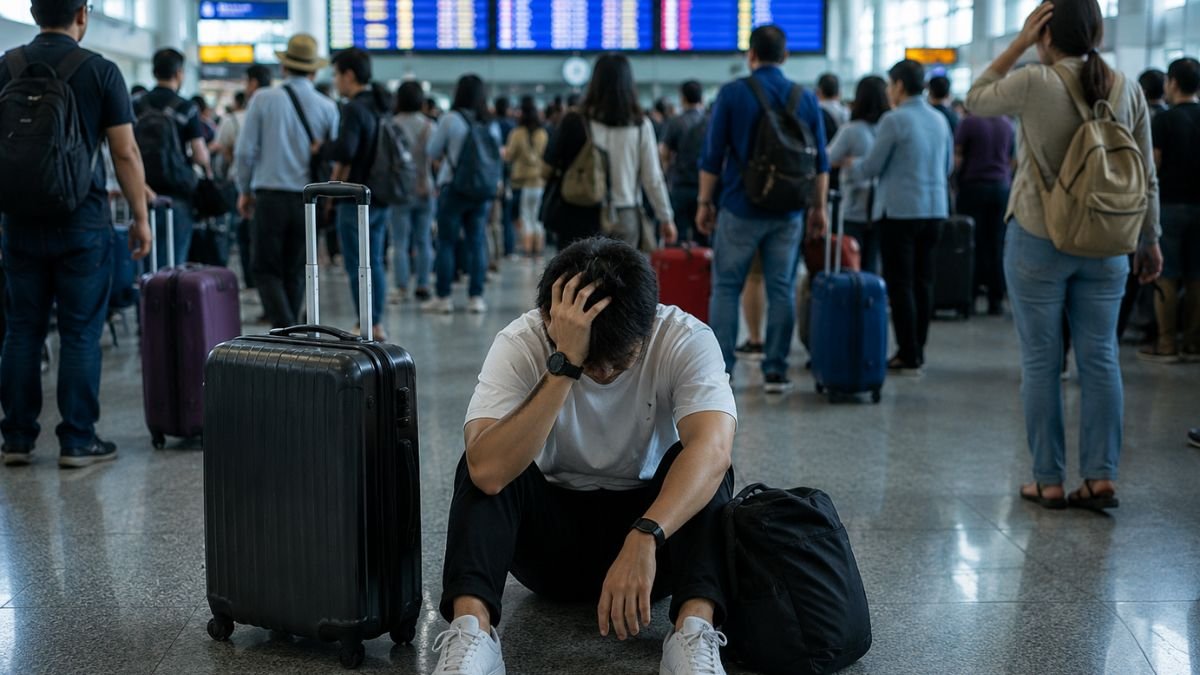
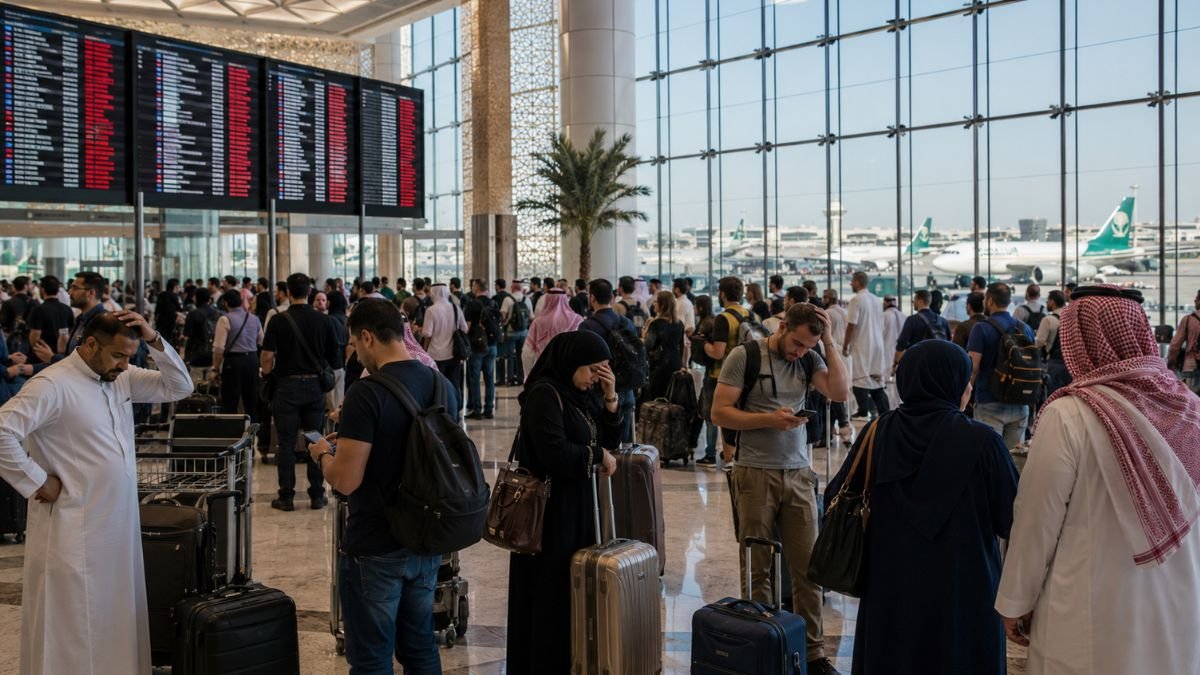
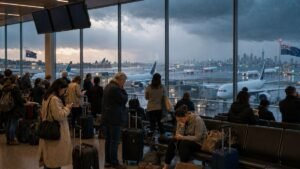
Hundreds of passengers faced major travel disruption at King Abdulaziz International Airport in Jeddah, Saudi Arabia, after flight operations were affected by 33 delays and five cancellations.
The disruption impacted several domestic and international routes, creating long waits, crowded terminals, and uncertainty for travelers flying with major airlines including Saudia, flynas, Emirates, Qatar Airways, and other carriers.

The airport is one of Saudi Arabia’s most important aviation hubs and serves millions of passengers every year. It is especially significant for religious travelers heading to Makkah and Madinah, as well as tourists, business passengers, and international transit travelers.
Passengers Face Long Waiting Times at Jeddah Airport
The disruption caused long queues and extended waiting periods inside airport terminals. Many passengers had to deal with revised boarding times, delayed departure announcements, and confusion over connecting flights.
For families, pilgrims, and business travelers, the sudden changes turned routine journeys into stressful experiences. Many passengers were seen checking departure screens, contacting airline counters, and waiting for updated information about their flights.

Transit travelers were among the most affected, as delayed arrivals created concerns about missed onward connections to other international destinations.
Domestic and International Routes Affected
The flight disruption affected several important routes linked to destinations across the Middle East, Asia, and Africa.
Flight tracking updates showed schedule instability on routes connected to cities such as Dubai, Cairo, Mumbai, Doha, Istanbul, Jakarta, Kuala Lumpur, and Islamabad.
Domestic routes within Saudi Arabia were also affected, adding pressure to airport operations. Delayed aircraft arrivals caused further changes to outbound flights, creating a chain reaction across multiple airline schedules.
Because aircraft and crew rotations are closely connected, even a small delay at a major hub can quickly affect several other flights.
Airlines Continue Adjusting Schedules
Airlines operating through King Abdulaziz International Airport continued adjusting their operations throughout the disruption. Passengers were advised to check flight details directly with their airlines before traveling to the airport.
Officials also warned that departure and arrival times could continue changing depending on operational conditions. Travelers were encouraged to use official airline apps, airport websites, and real-time flight tracking tools for the latest updates.
Airlines are expected to continue working to reduce passenger inconvenience and stabilize flight schedules as quickly as possible.
Airport Authorities Issue Travel Advisory
Airport authorities urged passengers to remain calm and avoid relying only on old schedule information. Travelers were advised to arrive early, monitor gate changes, and stay alert for airline notifications.
Passengers with connecting flights were also encouraged to contact their airline service desks to understand rebooking options, missed connection policies, and alternate travel arrangements.
The advisory is especially important for international travelers, as sudden changes can affect visa rules, hotel bookings, onward flights, and travel plans.
Why King Abdulaziz International Airport Matters
King Abdulaziz International Airport is a major gateway for Saudi Arabia and plays a central role in the country’s aviation and tourism network. Located in Jeddah, the airport serves as a key entry point for pilgrims traveling for Umrah and Hajj.
It also connects Saudi Arabia with major cities across Europe, Asia, Africa, and the Gulf region. Because of its strategic importance, disruptions at this airport can affect a large number of passengers and airline networks.
As Saudi Arabia expands its tourism sector under Vision 2030, smooth airport operations remain vital for supporting international travel growth.
Regional Aviation Pressure Adds to Challenges
The delays come during a period when several Middle Eastern airlines have been adjusting routes and schedules due to regional airspace pressure and operational rerouting.
When major Gulf airports experience disruptions, the impact can spread quickly because international flights depend on tight aircraft schedules, crew availability, and airport slot timings.
This makes real-time updates essential for travelers moving through busy international hubs.
Conclusion
The disruption at King Abdulaziz International Airport caused significant inconvenience for hundreds of travelers, with 33 flights delayed and five canceled across domestic and international routes.
Major destinations including Dubai, Cairo, Mumbai, Istanbul, Jakarta, and Kuala Lumpur were among those affected.
While airport operations continued, passengers were advised to stay updated through official airline and airport platforms, prepare for possible schedule changes, and explore rebooking options when needed.
The incident highlights how quickly aviation networks can be affected when pressure builds at major global travel hubs.