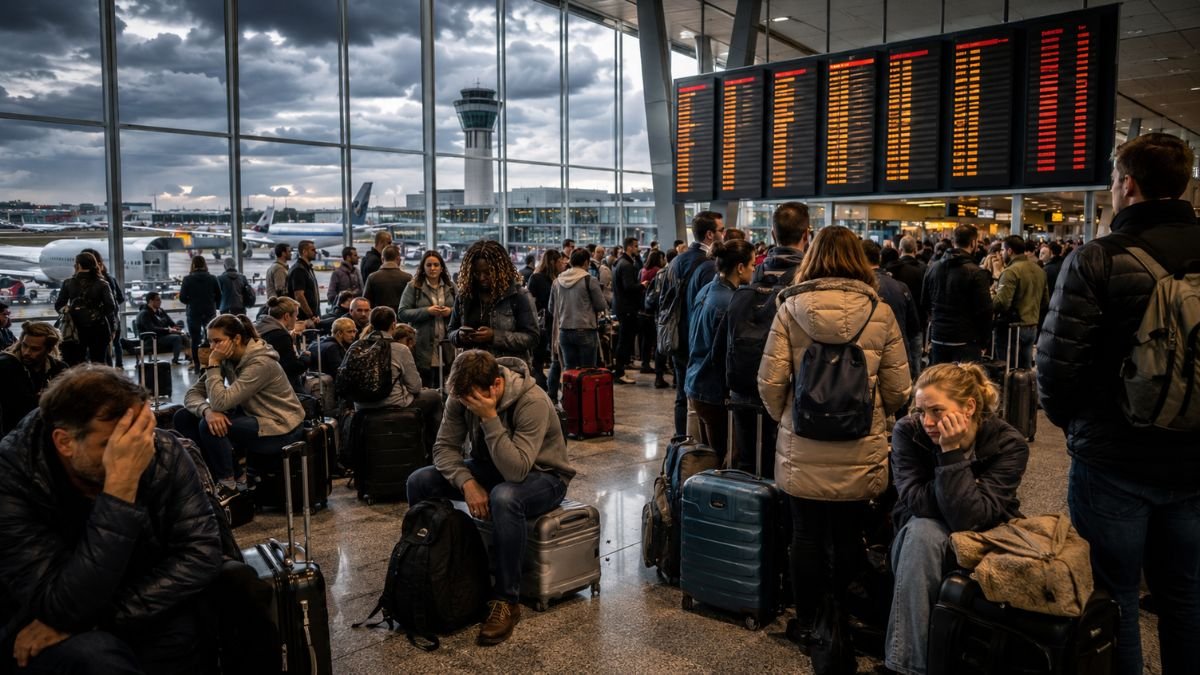
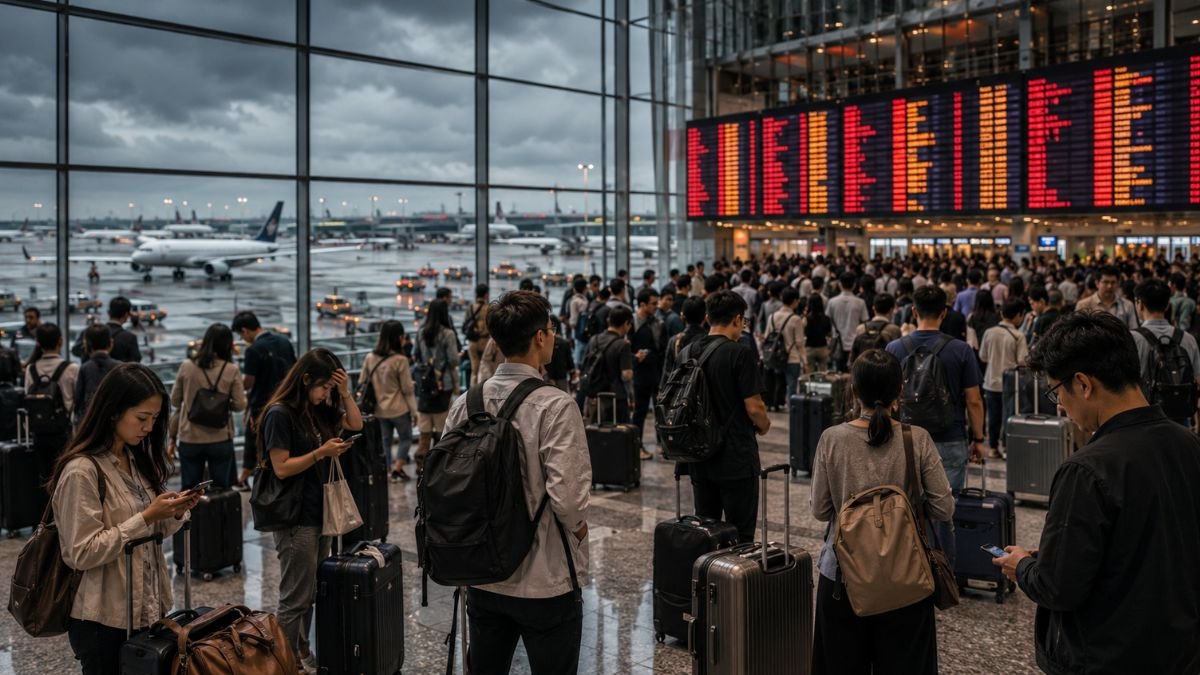
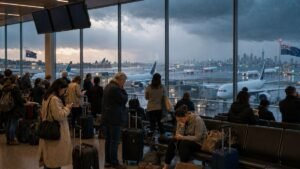
Thousands of travellers faced major disruption across Asia as airlines reported 6,424 delays and 349 cancellations across several major countries.
The disruptions affected airports in China, India, Japan, Indonesia, Thailand, Malaysia, Hong Kong and Saudi Arabia.

Major hubs including Guangzhou, Shenzhen, Delhi, Tokyo, Shanghai, Bangkok, Kuala Lumpur, Hong Kong, Jakarta, Mumbai, Riyadh and Jeddah all reported operational problems.
Both domestic and international passengers were affected as airlines worked through schedule changes, aircraft delays and airport congestion.
China Airports Among The Worst Hit
China recorded some of the heaviest disruption in the region. Guangzhou Baiyun International Airport reported 705 delays and 37 cancellations, the highest delay count among the listed airports.

Shenzhen Bao’an International Airport also faced severe disruption, with 519 delays and 48 cancellations, the highest cancellation total reported.
Shanghai Pudong recorded 304 delays and 17 cancellations, while Shanghai Hongqiao saw 198 delays and 14 cancellations. Beijing Capital also reported 146 delays and 14 cancellations.
Chinese carriers were among the most affected airlines. China Eastern recorded 478 delays and 36 cancellations, while Shenzhen Airlines reported 236 delays and 51 cancellations. Hainan Airlines also faced 145 delays and 29 cancellations.
India Sees Heavy Delays In Delhi And Mumbai
India’s busiest airports also experienced significant problems. Delhi’s Indira Gandhi International Airport recorded 585 delays and 13 cancellations, making it one of the most disrupted airports in Asia.
Mumbai’s Chhatrapati Shivaji Maharaj International Airport reported 214 delays and 5 cancellations. IndiGo was the most affected Indian airline, recording 365 delays. Air India also faced 201 delays, while Air India Express reported 89 delays.
Other Indian carriers including SpiceJet and Akasa Air were also impacted by the wider disruption.
Japan Airlines Face Widespread Delays
Japan also saw major aviation disruption, especially at Tokyo’s main airports. Tokyo Haneda Airport reported 546 delays and 6 cancellations, while Narita International Airport recorded 159 delays and 7 cancellations.
Japan Airlines reported 303 delays across Japanese airports, while All Nippon Airways recorded 245 delays and 3 cancellations. ANA Wings also reported 65 delays, adding to disruption across domestic Japanese routes.
Other affected Japanese airports included Fukuoka and New Chitose in Sapporo.
Bangkok, Kuala Lumpur, Hong Kong And Jakarta Affected
Thailand’s Suvarnabhumi Airport in Bangkok reported 167 delays, affecting carriers such as Thai Airways, Thai Vietjet Air and Bangkok Airways.
Kuala Lumpur International Airport recorded 192 delays and 2 cancellations, with AirAsia, Malindo Air and Malaysia Airlines among the affected airlines.
Hong Kong International Airport reported 141 delays, impacting Cathay Pacific, Hong Kong Airlines and other carriers. In Indonesia, Jakarta Soekarno-Hatta International Airport recorded 99 delays and 27 cancellations, affecting Batik Air, Citilink, Garuda Indonesia and Lion Air.
Saudi Airports Also Report Delays
Saudi Arabia also appeared in the disruption data. King Khalid International Airport in Riyadh recorded 68 delays, while King Abdulaziz International Airport in Jeddah reported 59 delays and 2 cancellations.
Saudia recorded 81 delays and 2 cancellations, while Flynas was also among the carriers affected.
What Passengers Should Do
Travellers should check flight status before leaving for the airport and monitor airline notifications closely. Passengers facing delays or cancellations should review rebooking and refund policies, keep travel documents accessible and save receipts for possible eligible expenses.
Conclusion
Asia’s latest flight disruption caused widespread travel problems across major airports, with 6,424 delays and 349 cancellations reported. Guangzhou, Shenzhen, Delhi, Tokyo, Shanghai, Kuala Lumpur, Bangkok, Hong Kong, Jakarta and Mumbai were among the worst-hit hubs.
Passengers should continue checking real-time updates as schedules may change throughout the day.