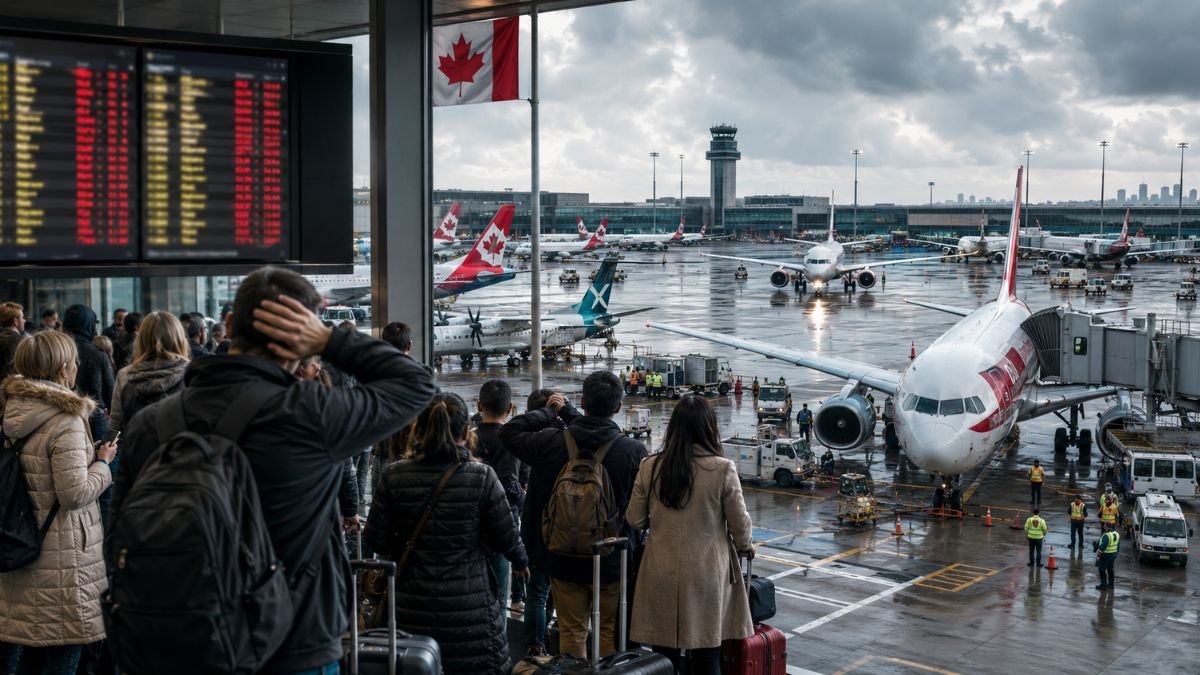
Air passengers across Canada faced major travel disruption on June 9 as airlines recorded 69 flight cancellations and 142 delays nationwide.
The impact was felt across major airports and regional hubs, including Toronto, Montreal, Ottawa, Halifax, Barrie, Vancouver, Calgary and Edmonton.

Several carriers, including Air Canada, Jazz, Air Inuit, WestJet Encore and other regional operators, experienced schedule problems throughout the day.
Thousands of travellers were left dealing with longer waits, missed connections and last-minute changes to their travel plans.
Severe Weather Adds Pressure In Ontario
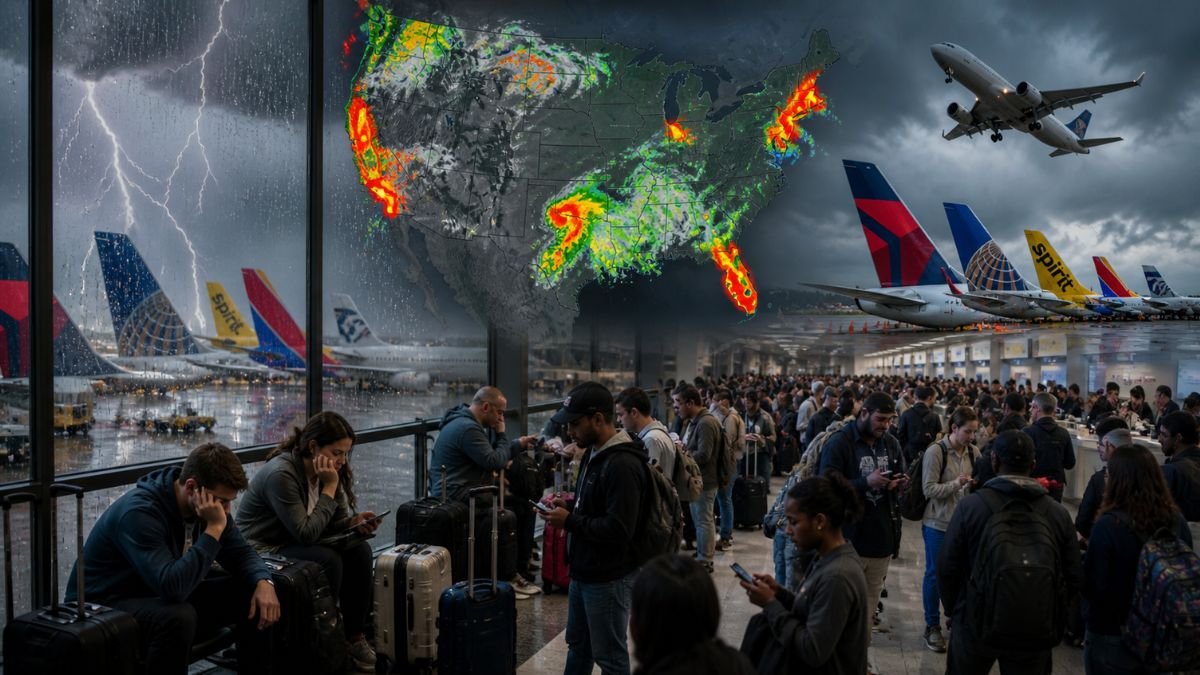
One of the biggest factors behind the disruption was severe weather in parts of Ontario. Environment Canada issued a Special Weather Statement for Simcoe County, warning of heavy rainfall of up to 50 millimetres in areas such as Barrie, Collingwood, Orillia and Owen Sound.

A slow-moving low-pressure system brought heavy rain and the risk of isolated thunderstorms. Officials warned that water could collect on roads and low-lying areas, making travel to and from airports more difficult.
These conditions added pressure to airports already dealing with delays, especially Toronto Pearson and Toronto City Centre, where heavy passenger movement and weather-related challenges created backlogs.
Montreal And Toronto Among Worst-Hit Airports
Montreal-Trudeau International Airport saw some of the highest disruption, with 13 cancellations and 32 delays. Toronto Pearson followed with 7 cancellations and 35 delays, making it one of the most delayed airports of the day.
Toronto City Centre also recorded 10 cancellations and 13 delays, while Vancouver International reported 10 cancellations and 23 delays. Calgary International had 5 cancellations and 12 delays, and Edmonton International recorded 6 cancellations and 3 delays.
Ottawa Macdonald-Cartier International Airport saw 4 cancellations and 4 delays, while Halifax International reported 3 cancellations and 2 delays. Smaller northern airports, including Kangirsuk, Akulivik and Kuujjuaq, also faced local disruption caused by weather and operational issues.
Airlines Facing Operational Challenges
The disruption affected both national and regional airlines. Jazz recorded 23 cancellations and 17 delays, making it one of the most affected carriers. Air Inuit reported 9 cancellations and 31 delays, while Air Canada had 7 cancellations and 24 delays.
PAL Airlines recorded 6 cancellations and 5 delays. Air Canada Rouge also faced disruption, with 5 cancellations and 4 delays. Pacific Coastal Airlines, WestJet and other carriers reported smaller but still notable schedule changes.
The figures show that the disruption was not limited to one airline or one airport. Instead, weather, operational pressure and regional scheduling challenges combined to create a difficult travel day across Canada.
What Passengers Should Do
Travellers affected by cancellations or delays should check their flight status through airline websites, mobile apps and official airport departure boards before leaving for the airport.
Passengers should contact their airline directly for rebooking, refund or alternative route options. Those travelling through areas affected by heavy rain should allow extra time to reach the airport safely and avoid flooded roads.
Travellers should also keep receipts for meals, transport or hotel stays in case they need to file a travel insurance claim.
Conclusion
Canada’s air travel network faced a difficult day as 69 cancellations and 142 delays disrupted flights across major cities and regional airports. Heavy rain in Ontario, operational pressure and airline schedule changes combined to affect thousands of passengers.
Travellers are advised to monitor updates closely, stay flexible and contact airlines quickly for rebooking support.