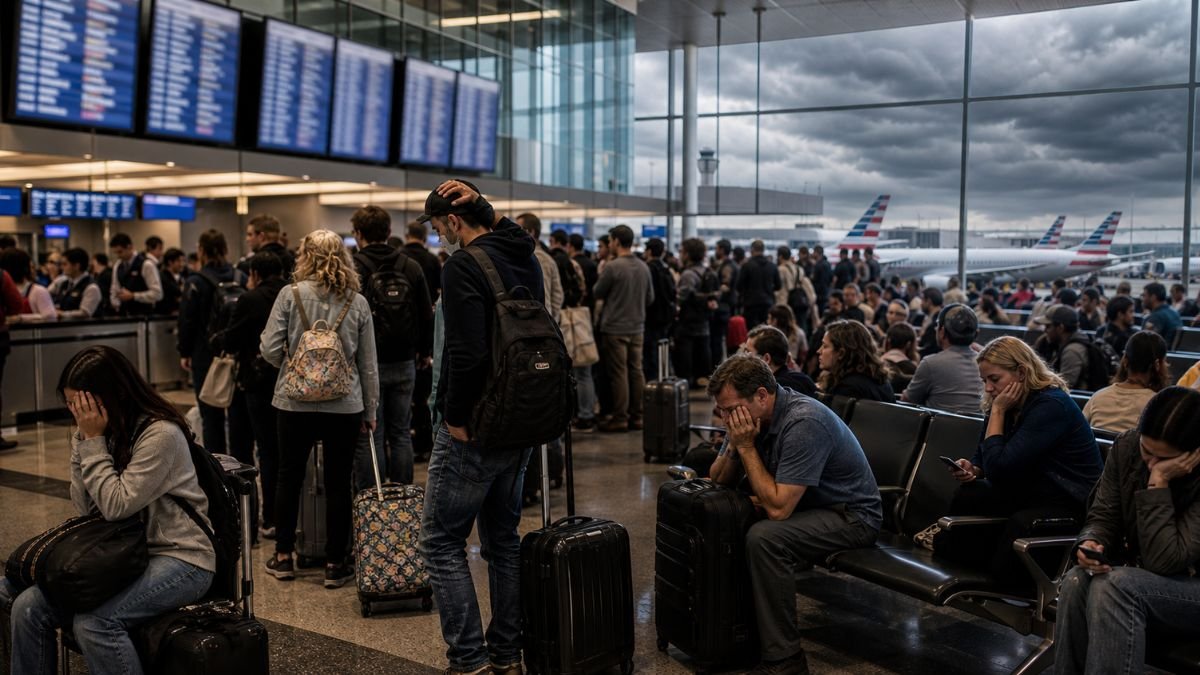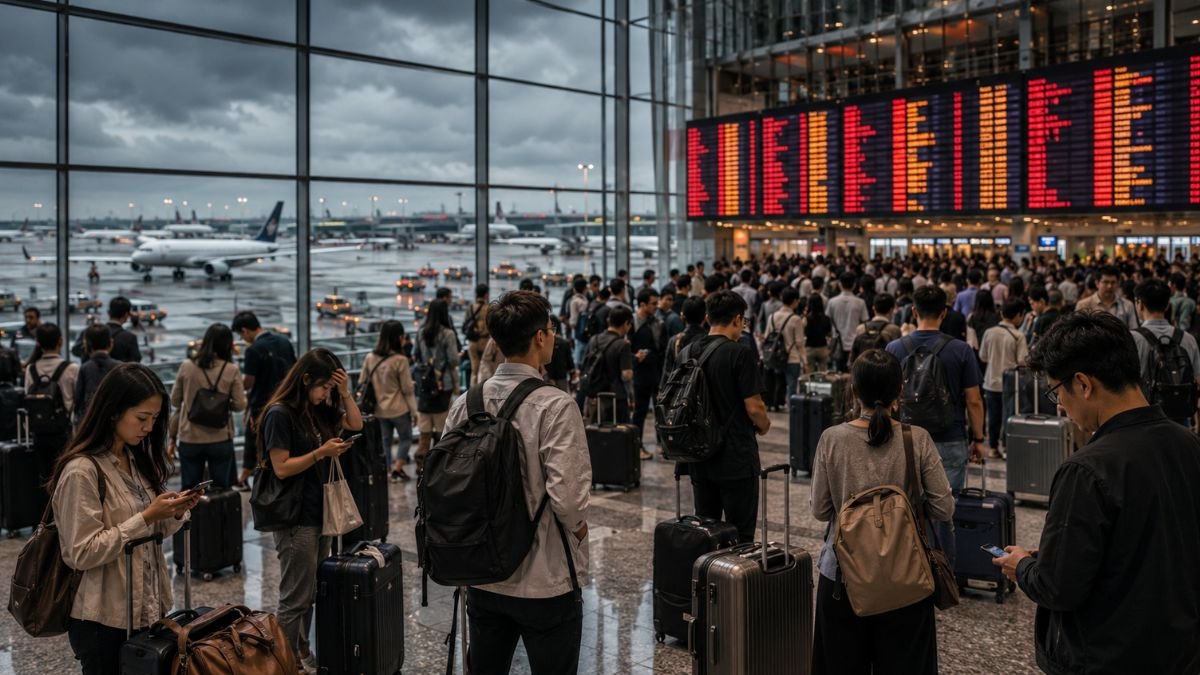
Air travel across Europe has been thrown into chaos as multiple countries—including England, Latvia, the Netherlands, France, and Russia—face widespread flight cancellations and delays.
Major airports such as London Heathrow, Riga International, Amsterdam Schiphol, Paris Charles de Gaulle, and Moscow Sheremetyevo have all reported significant operational disruptions.

A total of more than 45 flights have been canceled, while nearly 800 flights have been delayed, affecting thousands of passengers across the region.
Airlines including SAS, British Airways, KLM, Air Baltic, and others are struggling to maintain schedules amid staffing shortages, technical issues, and airport congestion.
Major Airlines Affected Across Europe
Several leading European airlines have been heavily impacted by the disruptions. Scandinavian carrier SAS is among the hardest hit, reporting multiple cancellations along with dozens of delays.

British Airways is also facing operational challenges, particularly at its main hub in London Heathrow. The airline has recorded several cancellations and a high number of delayed flights, causing inconvenience for both domestic and international passengers.
KLM, based in the Netherlands, is experiencing significant disruption at Amsterdam Schiphol Airport. With numerous delays and cancellations, the airline’s operations have contributed to congestion at one of Europe’s busiest aviation hubs.
Air Baltic, Aeroflot, Swiss, and other regional carriers are also facing difficulties, with delays spreading across multiple routes and destinations.
Key Airports Facing Heavy Disruptions

The impact of these disruptions is most visible at major European airports. London Heathrow in England has become a focal point for delays, with hundreds of flights affected due to operational bottlenecks.
Amsterdam Schiphol Airport in the Netherlands is also experiencing severe congestion, as delays ripple through connecting flights across Europe. Similarly, Paris Charles de Gaulle Airport in France has seen widespread delays, impacting both short-haul and long-haul travel.
In Russia, Moscow’s Sheremetyevo Airport is dealing with flight disruptions caused by technical and operational issues. Riga International Airport in Latvia is also affected, particularly due to delays involving Air Baltic flights.
Other airports across Europe, including Oslo, Stockholm, Brussels, Málaga, and Naples, are experiencing similar challenges, highlighting the widespread nature of the disruption.
Country-Wise Impact of Flight Delays
England
Travelers flying from England, especially through London Heathrow, are facing long delays and cancellations. British Airways operations have been significantly affected, contributing to congestion and longer wait times.
Netherlands
Amsterdam Schiphol remains one of the busiest airports in Europe, and disruptions here are causing a ripple effect across international travel. KLM passengers are particularly affected by delays.
France
Paris Charles de Gaulle Airport is experiencing major delays, with flights across Europe impacted. Both domestic and international travelers are facing extended waiting times.
Russia
Moscow’s Sheremetyevo Airport has reported multiple delays and cancellations, with airlines like Aeroflot adjusting operations to manage the situation.
Latvia
Riga International Airport is seeing delays primarily linked to Air Baltic operations, affecting regional and international routes.
Causes Behind the Disruptions
Several factors are contributing to the current travel chaos across Europe. Staffing shortages at airports and airlines have reduced operational efficiency, while technical issues with aircraft and systems have further complicated scheduling.
Airport congestion is another major factor, especially at key transit hubs handling high passenger volumes. As more travelers return to air travel, infrastructure is struggling to keep up with demand.
Weather conditions and logistical challenges are also playing a role in some regions, adding to the overall disruption.
What Passengers Should Do Now
Travelers affected by these disruptions should take proactive steps to minimize inconvenience:
- Check flight status regularly: Use airline websites or flight tracking apps for real-time updates
- Consider rebooking options: Airlines are offering alternative flights where available
- Arrive early at airports: Expect longer queues and processing times
- Stay flexible: Alternative routes or travel dates may be necessary
- Ask about compensation: Depending on delay length, passengers may be eligible for support
Being prepared and informed can help travelers navigate the disruptions more smoothly.
Conclusion
The ongoing flight disruptions across England, Latvia, the Netherlands, France, Russia, and other parts of Europe highlight the challenges facing the aviation industry. With cancellations and delays affecting major airports and airlines, passengers are experiencing significant travel difficulties.
While the situation remains fluid, staying updated, planning ahead, and remaining flexible are key to managing travel during this period.
As airlines and airports work to restore normal operations, travelers should expect continued disruptions in the short term but can still navigate their journeys with proper preparation.